
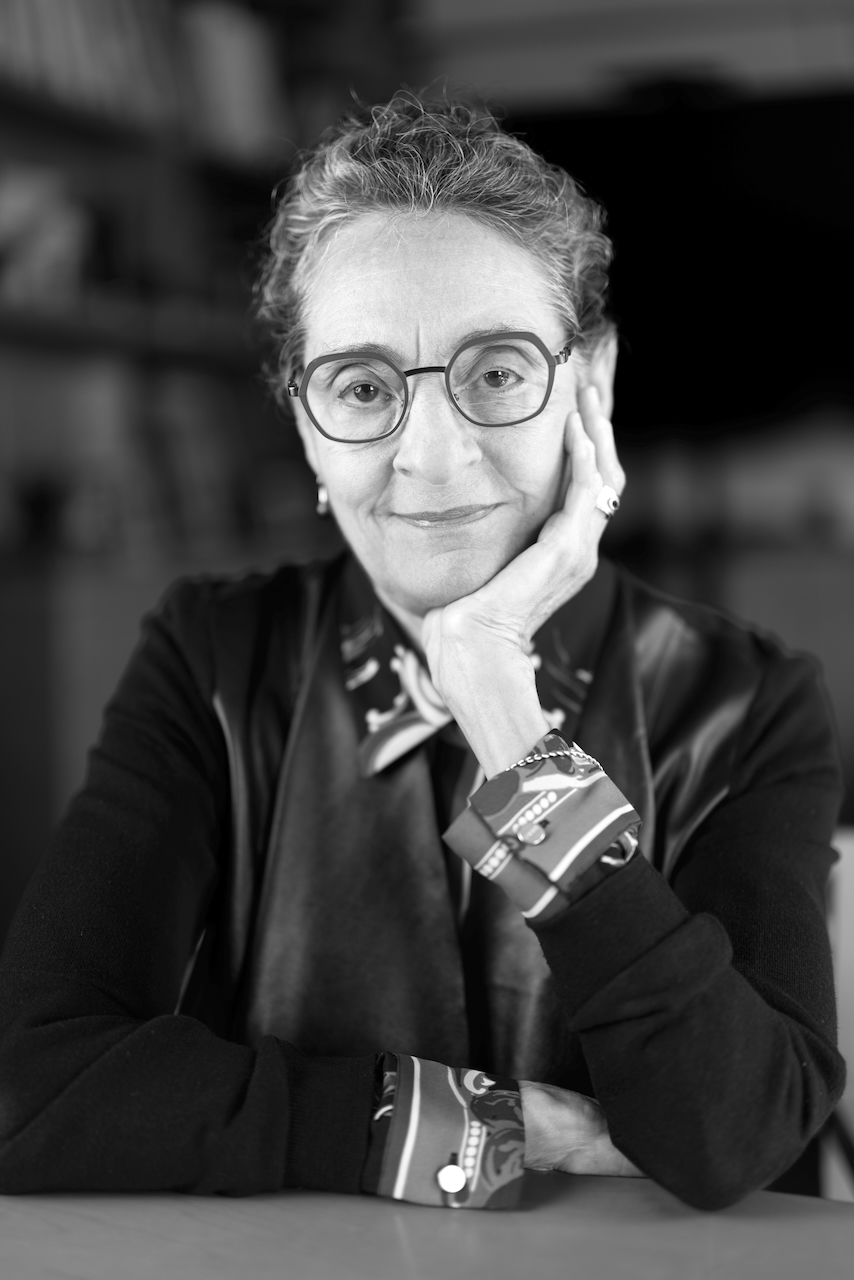
Carla Shatz has spent her life asking a question that sounds simple but turns out to be profound: how does the brain build itself?
When you meet her, you sense the discipline behind that inquiry. She is composed and quietly exacting. Her focus is the kind that defines a scientific life. In conversation, she moves carefully, assembling ideas the way neurons assemble circuits, piece by piece, connection by connection.
Shatz transformed our understanding of brain development by showing that neural circuits are not merely laid down by a genetic blueprint. They are sculpted by activity. Even before experience floods in through the senses, the brain generates its own patterns of electrical signaling. Those patterns guide which connections are strengthened and which are pruned away. The brain rehearses its future. It refines itself through internal dialogue.
This idea shifted the field. Development was no longer a passive unfolding. It was dynamic, competitive, and alive. Neurons communicate, negotiate, and withdraw. They respond to timing and rhythm. In her work, the young brain is not a blank slate waiting to be written on. It is an active participant in its own formation.
Later, she uncovered another layer of complexity. Molecules once believed to belong solely to the immune system turned out to play critical roles in shaping synapses. The boundaries between systems blurred. Immunology and neuroscience began to overlap in ways few had anticipated. The implications stretch into our understanding of neurodevelopmental disorders and neurodegeneration. Connections that fail to refine properly can echo across a lifetime.
What stands out most is her intellectual courage. To propose that spontaneous neural activity guides wiring before sensory experience was to challenge prevailing assumptions. She followed the data where it led, even when it unsettled established frameworks. She has built institutions, led the Bio-X program at Stanford, and mentored generations of neuroscientists. Her influence radiates through both published papers and the people she has trained.
The brain, in her telling, is not fixed at birth. It is shaped by activity, by competition, and by molecular conversations between cells. It is sculpted over time. Carla Shatz has spent her career illuminating that delicate process. The story of how a brain forms is, after all, the story of how each of us comes into being.


