
Chris Anderson has spent his life at the hinge of technological change, where curiosity meets invention. At 3D Robotics in Berkeley, surrounded by propellers, circuit boards, and the quiet hum of experimentation, he reflected a rare blend of editor, engineer, and entrepreneur. Once the editor who guided Wired through the early turbulence of the digital revolution, Anderson has since become one of its architects, translating complex ideas about networks, abundance, and open creation into forms that help others see what comes next.
He was born in London and raised in the United States. Trained as a physicist, he studied quantum mechanics before turning to journalism, beginning at Nature, Science, and The Economist, where he worked in London, Hong Kong, and New York. In 2001 he became Editor in Chief of Wired, leading it through a decade that saw the rise of social media, smartphones, and the web economy. Under his direction, Wired became a cultural compass for a world being rewired in real time.
In 2004 he wrote “The Long Tail,” an idea that reframed how people think about markets and creativity. Anderson argued that the internet would transform the economics of scarcity into the economics of possibility. He later expanded the essay into a book that became a touchstone for digital entrepreneurs everywhere. His follow-up, Free: The Future of a Radical Price, explored how giving things away could create new forms of value. In Makers: The New Industrial Revolution, he captured the spirit of a movement that was restoring creativity and experimentation to everyday life.
After Wired, Anderson stepped fully into the world he had been chronicling. He became CEO of 3D Robotics, one of the most influential drone companies in the United States, where he helped pioneer accessible and open tools for aerial innovation. He founded the Linux Foundation’s Dronecode Project and built the DIY Drones and DIY Robocars communities, including the open-source ArduPilot autopilot project. These initiatives opened advanced flight and robotics technology to anyone with curiosity and a workbench.
He later served as CTO of Kittyhawk, Larry Page’s air taxi company, where he worked on the future of aviation and autonomous flight. Today, he is building a stealth project at the intersection of artificial intelligence and advanced manufacturing, exploring how machines can learn to make with intelligence and precision. He also serves as an angel investor in companies shaping those same frontiers.
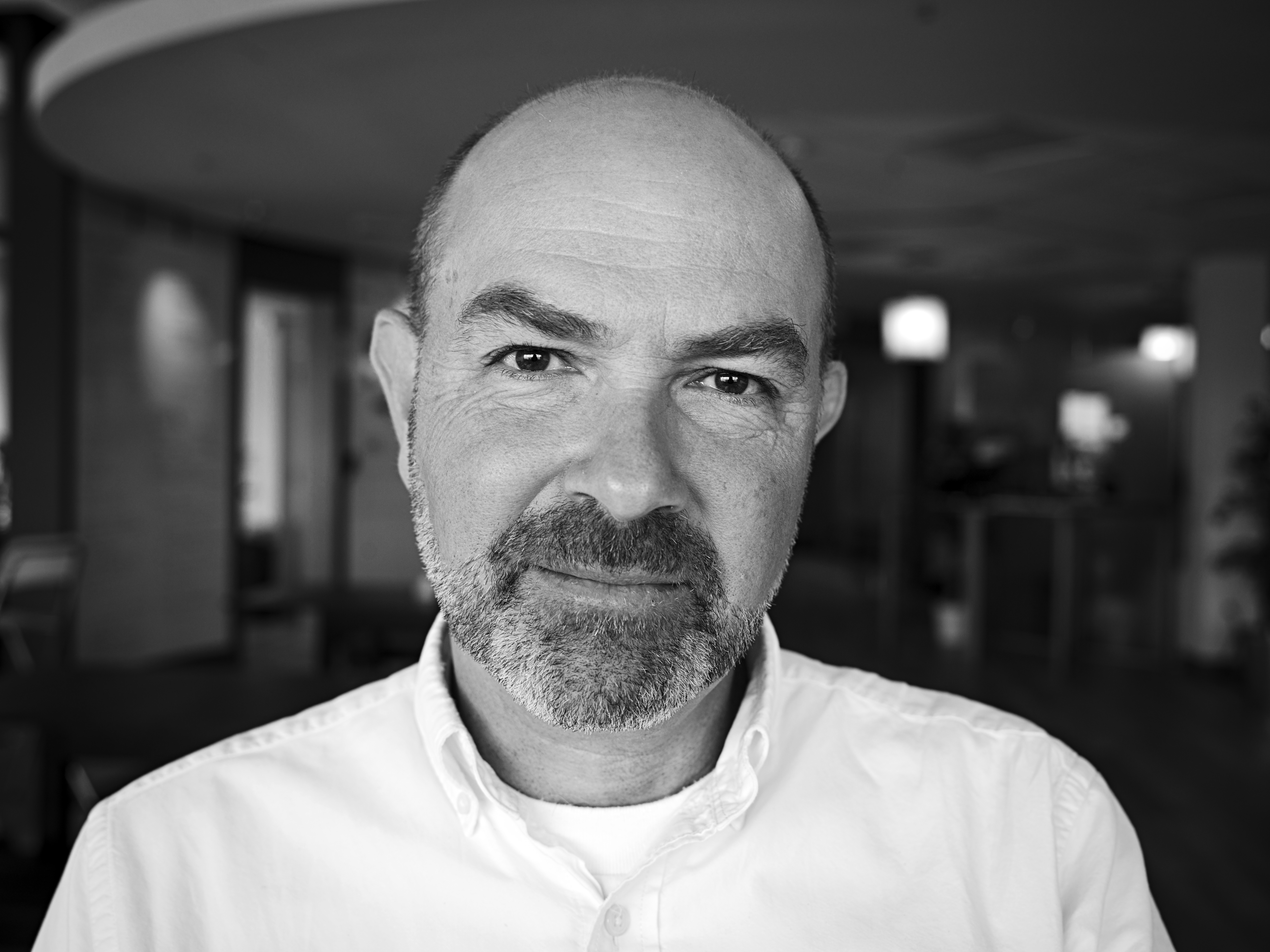
When photographed at 3D Robotics, Anderson appears at ease amid tools and prototypes, the workshop around him filled with evidence of ideas in motion. The space mirrors his own life, where theory becomes practice and making is an act of discovery. Technology, for him, is not destiny but possibility, a place where imagination and engineering converge.
What defines Anderson, more than any single role, is a capacity to see pattern where others see noise. He moves easily between scales, from the design of a sensor to the shape of an industry. Whether editing, inventing, or building, his work follows the same thread: that progress begins when knowledge is shared and the tools of creation are placed in everyone’s hands.
Living in Northern California, he continues to write, build, and invest in the systems that will shape the next industrial revolution.


