
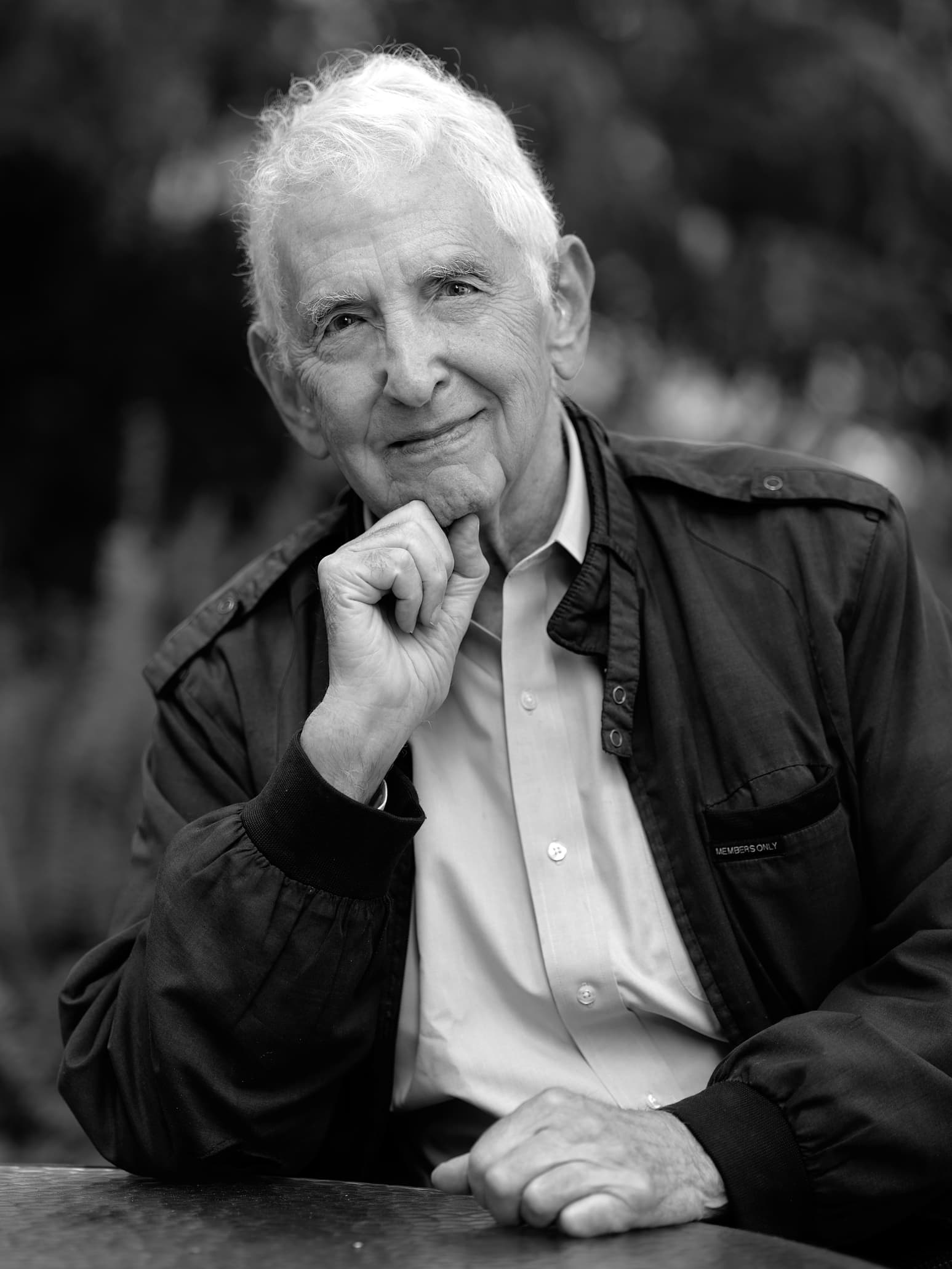
Daniel Ellsberg had the kind of moral clarity that makes history pivot. A former Marine Corps officer and RAND Corporation analyst, he is best known for leaking the Pentagon Papers in 1971, a classified study that exposed the lies and misrepresentations fueling the Vietnam War. But to those who knew him, Ellsberg was more than the man who risked everything to tell the truth. He was generous, warm, razor-sharp, and deeply human.
I first met Daniel in 2008 over breakfast in Berkeley with journalist Robert Rosenthal. They were meeting for the first time, though their lives had already intertwined through history. Robert, then a young reporter at The New York Times, had been quietly instructed to photograph the Pentagon Papers, just in case the documents had to be spirited away before publication. It was a hush-hush assignment, carried out in the shadows of looming legal threats. Sitting there with the two of them decades later, I watched as they uncovered new memories, each revealing details the other hadn’t known. Time had made space for a fuller reckoning of what had happened. It was a remarkable moment: two men who had both played roles in an act of defiance that would forever alter the relationship between government and press.
Ellsberg’s early life followed a classic American arc. Harvard. The Marines. A stint in the Defense Department. He was no outsider. He believed in the system. But Vietnam shattered that belief. While working at RAND, he read in detail the classified report on U.S. involvement in the war and came to a painful realization: the government had known for years that the war was unwinnable, yet continued to send young Americans to die. It wasn’t just a policy failure, it was a moral catastrophe. And he could no longer remain silent.
So, at great personal risk, he copied the report and gave it to the press. The Nixon administration responded by charging him under the Espionage Act. Had he been convicted, he could have spent the rest of his life in prison. But the case was dismissed after it was revealed that White House operatives had broken into his psychiatrist’s office, an illegal act that helped set off the chain of events leading to Watergate.
Yet to define Ellsberg only by the Pentagon Papers is to miss the man himself. He remained an unrelenting advocate for peace and transparency for the rest of his life. He was one of the first to publicly warn about the dangers of nuclear weapons, often describing how close the world had come to annihilation, not just during the Cold War but in quieter moments of miscalculation. His later book The Doomsday Machine is a harrowing account of nuclear strategy from someone who had been inside the machine.
The last time I photographed Daniel was in his garden in the Berkeley Hills. It was a quiet afternoon, the kind California gives you in spring, light filtering through the trees, bees among the lavender. He sat calmly, a slight smile on his face, hand to his chin. That was Daniel: thoughtful, kind, with the gentle intensity of someone who had looked into the abyss and come back committed to life.
He was never one for vanity. He didn’t think of himself as a hero, though history will remember him as one. He simply believed that when you know a terrible truth, you have a responsibility to act. That belief guided him until the end.
Daniel Ellsberg passed away in 2023, surrounded by family. The courage it took to do what he did is rare, but even rarer was the heart and humility behind it. He gave his life to the service of truth, not out of anger, but out of love, for his country, for humanity, and for the generations yet to come. I was lucky to call him a friend.


