
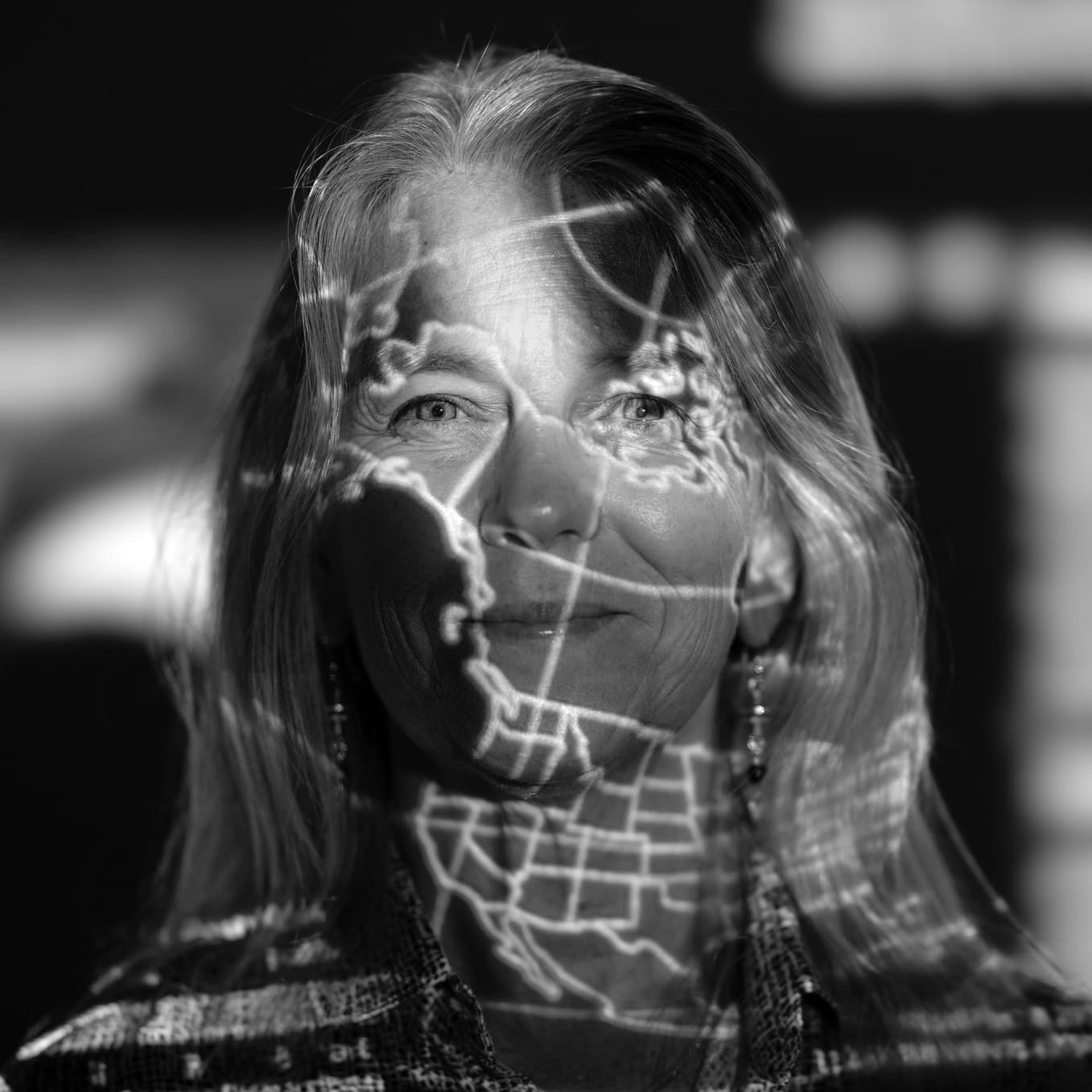
The halls of the MIT Media Lab are rarely quiet, but on that particular autumn evening in 2023, as the sun sank below the skyline, the building took on an almost sacred stillness. Nearly everyone had left, save for a few lingering researchers and, of course, Dava Newman, scientist, engineer, explorer. She led me through the labyrinth of projects with the enthusiasm of a child unveiling a secret kingdom, her gestures broad and full of possibility.
Dava is one of those rare individuals who seems to exist in perpetual forward motion. She speaks in a way that carries you along, as though you’re being pulled into the gravity well of her ideas. At MIT, she is the Apollo Program Professor of Astronautics and the director of the Media Lab, but her work extends far beyond those titles. She has spent her life thinking about how to move in space, how to protect, empower, and extend the human body beyond the confines of Earth’s atmosphere.
She is perhaps best known for her development of the BioSuit, a second skin for astronauts, a flexible, skin-tight spacesuit that replaces the bulky, gas-pressurized shells we’ve used since the dawn of human spaceflight. Watching her describe it in the hushed light of the empty Media Lab, I could see the BioSuit not as an object but as an idea, an act of liberation. “We have to think about mobility, agility, how the body really wants to move,” she said, stretching her arms as though she could already feel the ease of motion the suit would allow. “If we’re going to live and work on Mars, we can’t be trapped in tin cans. We have to be able to move, to explore.”
That theme, movement, exploration, forward progress, threads through all of her work. Before taking the helm at the Media Lab, she served as NASA’s Deputy Administrator, where she helped shape the future of space policy and exploration. She spoke about that time not in terms of bureaucracy, but of momentum, of the push toward deep space, toward Mars, toward a future where spaceflight is not an extraordinary event but a natural extension of human ambition.
As we walked past projects that blurred the boundaries of biology, robotics, and design, I couldn’t help but see a pattern, Dava’s work has always been about synthesis. She stands at the intersection of engineering and art, of science and philosophy. She thinks not just about the mechanics of survival, but about the aesthetics of human experience in extreme environments. It’s not enough for humans to endure in space; we must thrive.
She stopped in front of a set of prototypes, wearable robotics designed to assist human motion. “This,” she said, running her hand over a sleek exoskeletal form, “isn’t just for astronauts. Think about mobility on Earth, aging populations, people with disabilities. Everything we design for space should serve people here, too.”
There was something deeply optimistic in the way she spoke about technology, not as a cold, impersonal force, but as an extension of our collective creativity, something meant to enhance the very essence of being human. It reminded me of something she had said earlier in the evening, almost offhandedly: “Exploration is fundamentally about caring. We care enough to push beyond what we know.”
It is easy, in the vast machinery of space exploration, to become fixated on the numbers, the calculations, the sheer technological audacity of it all. But standing there in the quiet glow of the Media Lab, listening to Dava Newman, I was reminded that space is not just an engineering challenge, it is a human endeavor. It is about movement, about stretching ourselves beyond what we once thought possible. It is about the sheer joy of stepping into the unknown.
And Dava, in so many ways, is already there, charting the path, designing the future, waiting for the rest of us to catch up.


