
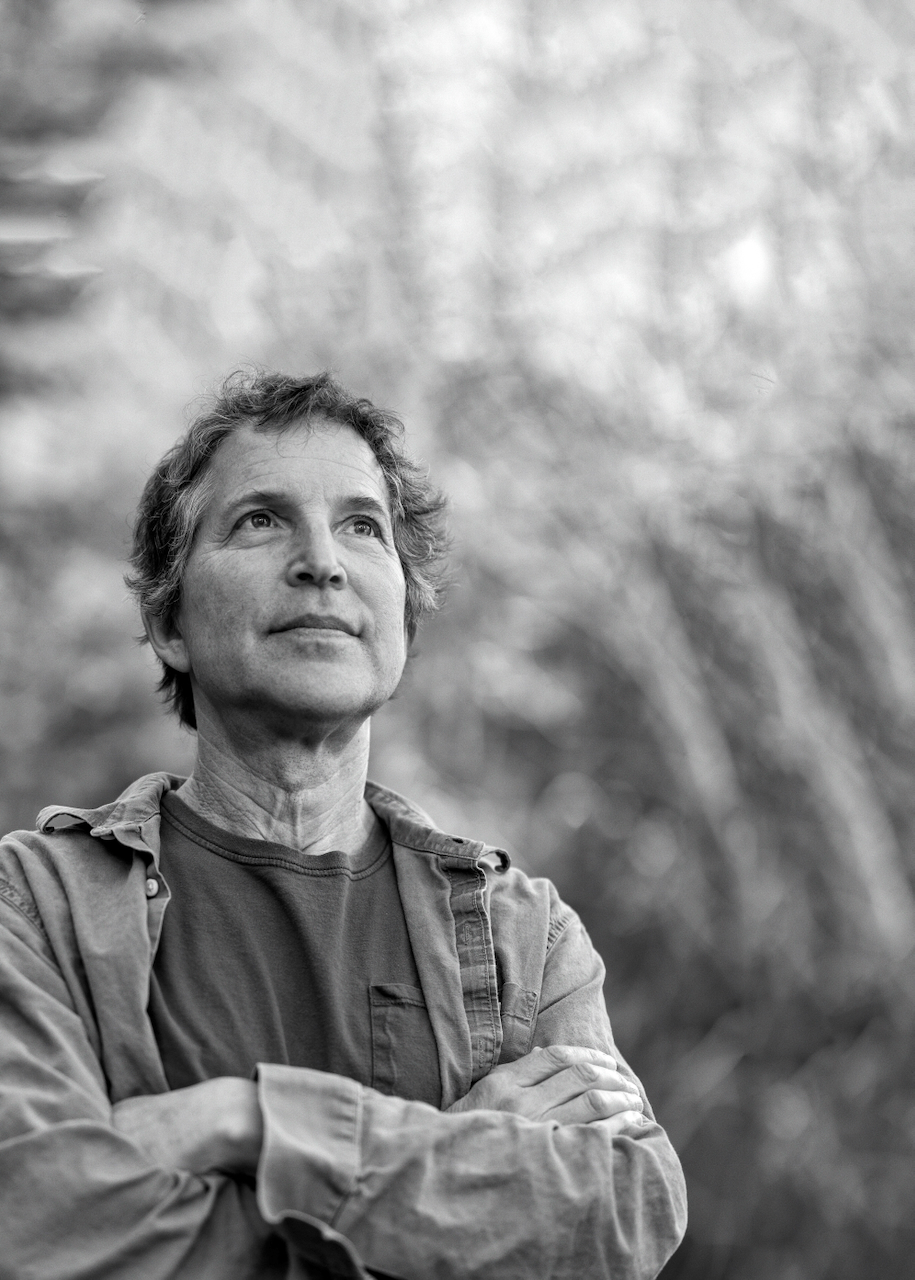
I photographed David Baker inside his lab at the Institute for Protein Design on January 21, 2026. The room carried a quiet intensity. Screens glowed with rotating molecular structures. Whiteboards were layered with equations, sketches, half erased ideas that had not yet settled into final form. People moved deliberately, speaking softly, as if the work itself required a certain respect. Baker seemed entirely at home in that atmosphere. This is not a place of reflection. It is a place of making.
There is nothing performative about him. He does not explain for the sake of explanation. His attention stays fixed on the problem in front of him, on what works and what fails, on structures that nearly hold together and ones that collapse under their own logic. Time here is measured in iterations, not hours. The goal is not to describe nature but to understand it well enough to build with it.
Proteins are the machinery of life. They act as enzymes, messengers, scaffolds, switches. What they do depends entirely on how they fold. A protein begins as a linear chain of amino acids, but almost instantly it twists and collapses into a precise three dimensional shape. That shape determines its function. For much of modern biology, this folding process was something scientists could only observe after the fact. Structures were solved experimentally, often years after a protein was identified. Predicting a protein’s shape from its sequence, or designing a brand new protein that would reliably fold into a chosen form, remained one of the field’s deepest challenges.
Baker approached the problem as a question of physics and computation rather than biological intuition. He treated protein folding as an energy landscape shaped by forces that could be modeled, sampled, and optimized. From that effort emerged Rosetta, a powerful and evolving computational framework that allowed researchers to predict how proteins fold and, eventually, to design new ones. Rosetta was never a single static program. It became a platform and a shared language for thinking about proteins at the level of atoms, forces, and probabilities.
The shift from prediction to design marked a turning point. With Rosetta, Baker and his collaborators showed that it was possible to begin with a desired shape or function and work backward to identify an amino acid sequence that would reliably fold into it. These were not small tweaks to existing biology. They were entirely new protein structures, forms that had never existed before. Biology began to look less like a catalog of what evolution happened to produce and more like a space that could be deliberately explored.
The impact of that shift is now visible across science and medicine. Designed enzymes can catalyze reactions that natural proteins never evolved to perform. Custom binding proteins can neutralize viruses, block disease pathways, or deliver drugs with remarkable specificity. During the COVID pandemic, protein design methods rooted in Rosetta were used to rapidly create novel binders to SARS-CoV-2, demonstrating a speed and flexibility that traditional biological approaches could not match. As machine learning systems like AlphaFold transformed structure prediction, Rosetta evolved alongside them, remaining central to the harder challenge of design. Not what nature made, but what could be made.
In 2024, Baker was awarded the Nobel Prize in Chemistry for his foundational contributions to protein design. What made the recognition unusual was its timing. The prize did not mark a conclusion or a summation. It acknowledged a body of work that is still actively expanding. Baker did not win for something safely locked in the past. He was recognized while still deeply immersed in the problems that motivated the work in the first place.
The Institute for Protein Design reflects that forward looking mindset. It feels less like a traditional academic department and more like a workshop for the future of biology. Computation, wet lab experiments, and real world applications sit side by side. Ideas are tested quickly. Failures are expected. What matters is whether a design holds up when reality pushes back.
Baker himself is famously reluctant to be pulled away from this environment. Travel, ceremony, distraction of any kind feel secondary to the work. There is always another structure to test, another hypothesis to refine. Standing there with him, camera in hand, it was clear that the Nobel Prize had not changed the trajectory. If anything, it underscored how much remains unfinished.
Protein design is now moving from demonstration to infrastructure. Designed proteins are beginning to enter medicine, energy, materials, and manufacturing. They promise therapies that are more precise, industrial processes that are cleaner, and biological systems that are both powerful and biodegradable. In this vision, biology becomes a design discipline, guided by computation and constrained by physics rather than chance.
Baker measures progress not in accolades but in unanswered questions. The work continues because it must. The frontier is not behind him. It is very much still in front.


