
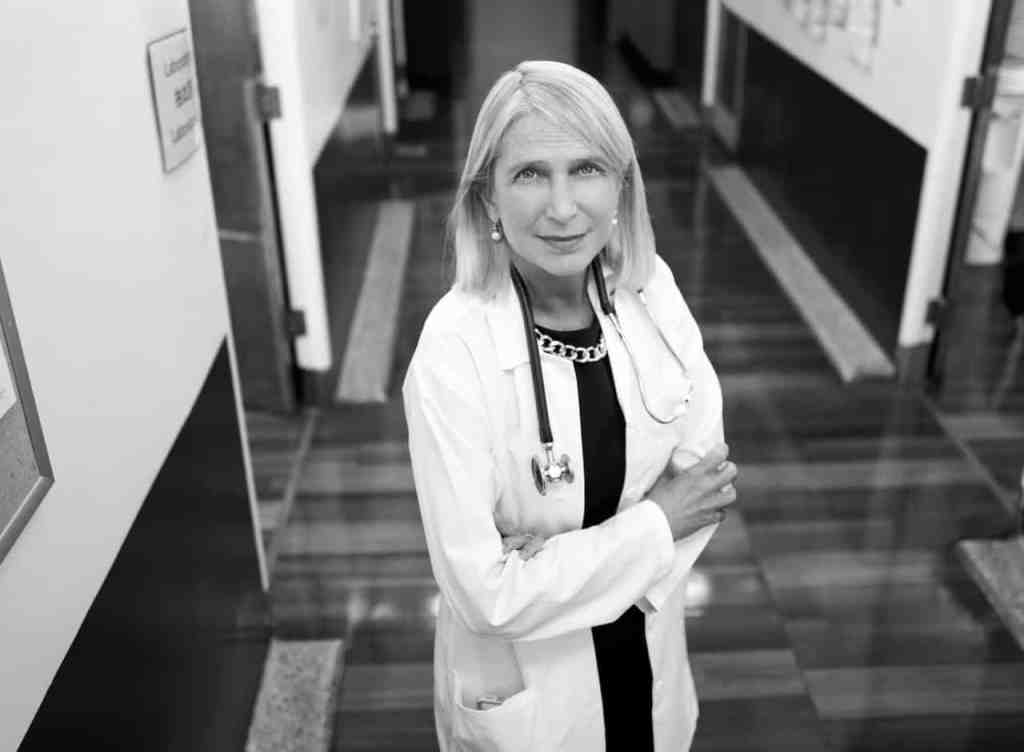
Dr. Diane Havlir has spent her career at the front lines of one of the greatest medical battles of our time. When I photographed her on April 21, 2021, at the historic HIV Clinic at Ward 86 at San Francisco General Hospital, she stood in a place that had once been the epicenter of despair, a ward where patients arrived knowing they would never leave. In the early 1980s, when HIV tore through the city, Ward 86 became one of the first dedicated outpatient clinics for people with AIDS, a place where medicine struggled to keep pace with an epidemic that showed no mercy.
Havlir arrived as a young doctor just as the crisis was at its peak. Patients, many in their twenties and thirties, came in with wasting syndrome, pneumocystis pneumonia, and Kaposi’s sarcoma, grim markers of a disease that offered no hope of survival. In those early years, treatment was often little more than compassionate care. “We were losing everyone. HIV wasn’t survivable.” she told me.
But she refused to accept that fate. As an infectious disease specialist and researcher, Havlir played a central role in developing the antiretroviral therapy (ART) drug cocktail, a breakthrough that transformed HIV from a death sentence into a chronic, manageable condition. She was part of the teams that proved that combining multiple drugs could suppress the virus, preventing it from replicating and giving the immune system a chance to recover. This approach, highly active antiretroviral therapy (HAART), was revolutionary. It slashed mortality rates by more than 60% within just a few years of its introduction in 1996.
Her work didn’t stop there. She led research proving that early treatment not only saved lives but also reduced transmission, a discovery that became the foundation for the modern “treatment as prevention” strategy. Today, thanks in large part to this approach, an HIV diagnosis is no longer a death sentence. People with access to treatment can live full, healthy lives, and the global death toll has dropped dramatically. The drug cocktail has saved an estimated 18 million lives worldwide and counting.
Ward 86, once a place of last rites, is now a symbol of medical triumph. It is still a clinic, but its patients are thriving, not dying. As we stood in its halls, Havlir spoke not of past victories but of the future, of closing the gaps in treatment, reaching those still left behind, and continuing the fight until HIV is history. Even after decades in the field, her sense of urgency has not waned.
She is not just a scientist or a physician. She is a healer of generations, a relentless force in the story of survival, and a testament to what medicine can achieve when combined with compassion and tenacity.


