
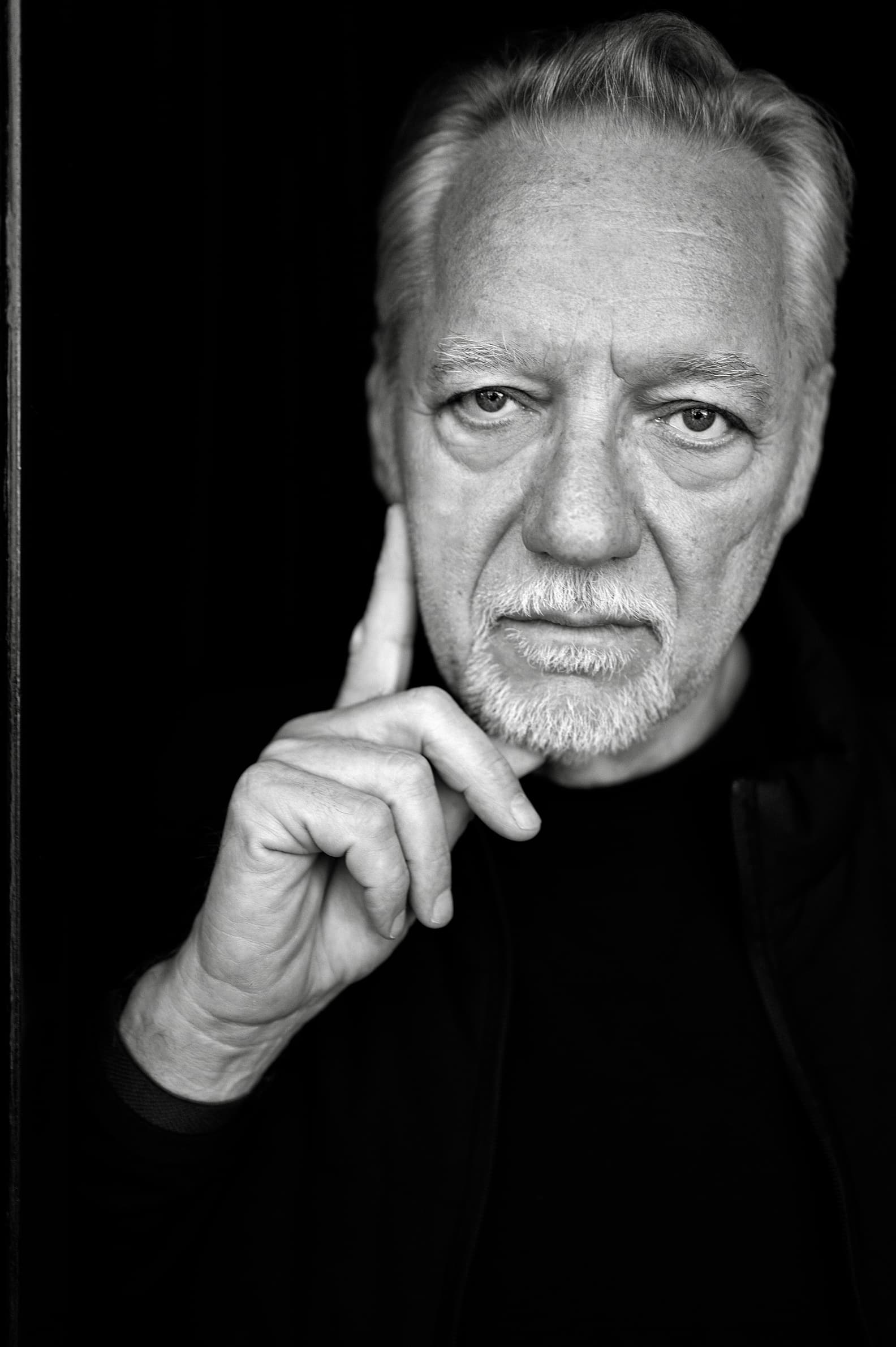
Edward Burtynsky is a photographer of scale, both in the literal sense of his vast industrial landscapes and in the conceptual weight of his images. Through his lens, we are confronted with the immense and often unsettling imprint of human industry on the planet. His large-scale compositions depict sprawling mines, labyrinthine waterways, and the geometry of consumption, revealing a world that is both beautiful and deeply unnerving. In Burtynsky’s work, progress and destruction are intertwined, forcing us to reckon with the landscapes we have created in the pursuit of growth.
I photographed Burtynsky in Paris on November 9, 2024, over a long lunch during Paris Photo. The city, a longstanding center of art and photography, felt like the perfect backdrop for a conversation with one of the most important visual chroniclers of our time. Over the course of our meeting, we discussed his artistic process, the evolving role of photography in shaping environmental consciousness, and the challenge of conveying scale and consequence within the confines of a single frame.
Burtynsky’s work is not simply documentary; it is meditative. His images are carefully composed to reveal patterns, both natural and man-made, that expose the intricate relationship between civilization and the environment. The aerial perspective of his photographs creates a paradox: the beauty of abstraction clashes with the stark reality of ecological transformation. This tension is what makes his work so arresting, his images are not didactic, yet they leave the viewer with an undeniable sense of urgency.
Thoughtful and precise, Burtynsky remains committed to his mission: documenting our changing planet with clarity and artistry. His photographs do not ask for easy conclusions but demand contemplation, pushing us to reconsider the cost of human ambition. As industry continues its relentless expansion, his work stands as both evidence and warning, urging us to see, truly see, the world we are shaping.


