
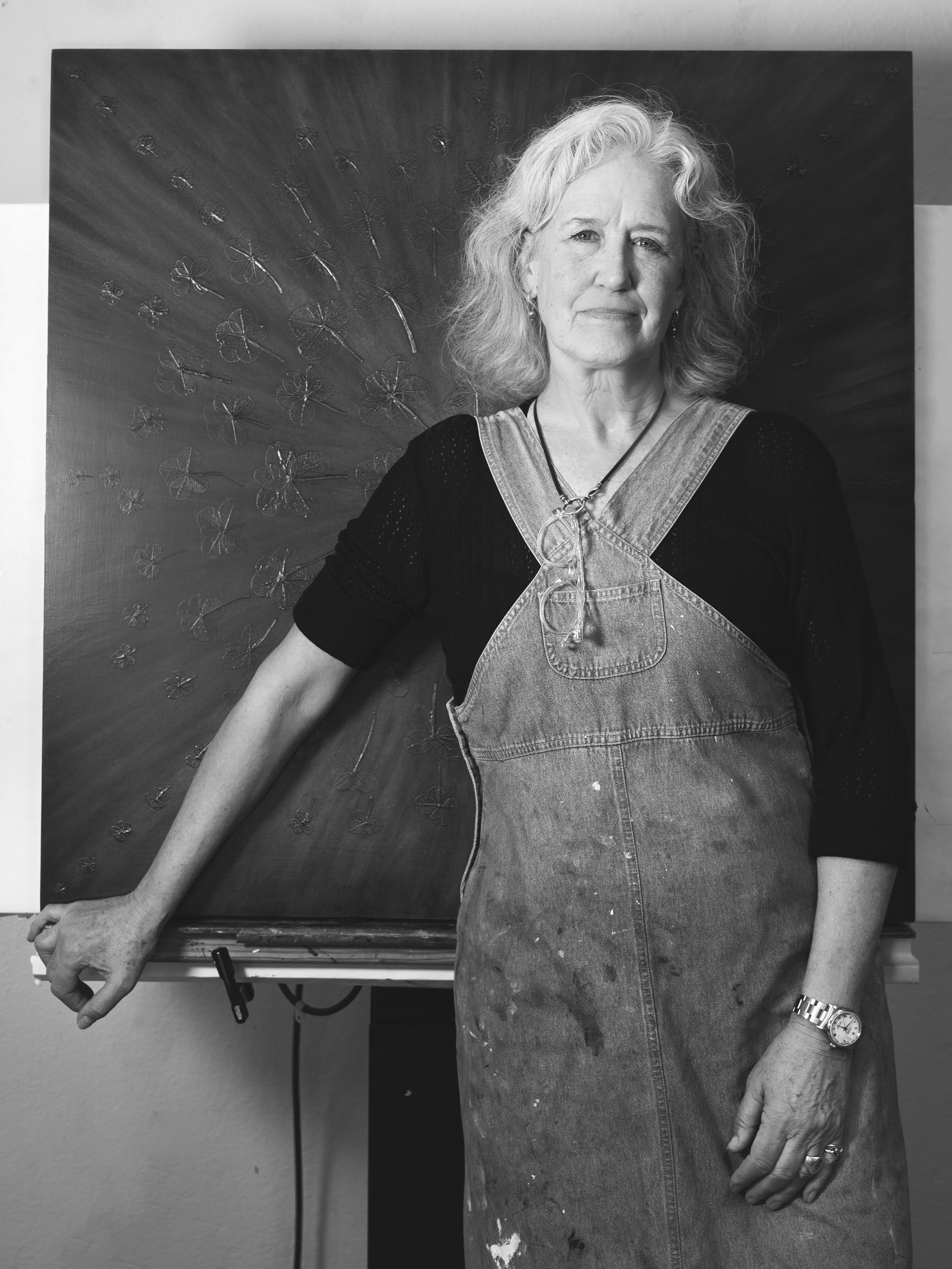
Isabella Kirkland stands at the intersection of art and natural history, a painter who has dedicated her life to documenting the fragile and often overlooked corners of the living world. From her home in Sausalito, she lives aboard the Yellow Ferry, an historic 1888 paddlewheel boat moored in Richardson Bay. The water around her residence serves as a constant reminder of nature’s rhythms, a daily tide chart written across the pilings and reflected light. Each day she makes her way to a floating studio nearby, a space surrounded by the same waters that shape her daily life and provide the shifting light in which she paints.
Kirkland’s art is driven by a devotion to species that most people never notice, and to others that are perilously close to vanishing. Her paintings emerge from long hours of research and observation. She studies preserved specimens in natural history collections, pores over taxonomic records, and spends time in the field. Out of this careful study come works that are both meticulous in detail and emotionally resonant. Her canvases teem with life. Fish, insects, orchids, lichens, and deep sea creatures appear together in arrangements that suggest both abundance and fragility.
One of her most celebrated projects, the “Taxa” series, grouped species by their ecological status: extinct, endangered, threatened, or newly discovered. Seen together, the panels resemble devotional altarpieces. Each species is presented as worthy of reverence, and their collective presence carries a sense of mourning as well as wonder. Other series have focused on pollinators, tropical organisms, and overlooked plants. Each body of work is an act of preservation, pulling subjects from the margins of field notes and placing them firmly in the cultural imagination.
Her choice to live on the Yellow Ferry and to paint in a floating studio is as deliberate as the choice of her subjects. Life on the water roots her in an environment that requires constant awareness of natural cycles. The tides lift and lower her home each day, storms rattle the harbor, and seabirds sweep overhead. In her floating studio, the light shifts across the bay and fills the room where she works. The setting has become both sanctuary and observatory, a place where art and ecology meet in real time.
Her practice is slow, layered, and deliberate. She begins with a concept, then sketches species into arrangements that reflect both science and imagination. Each organism is painted with fidelity to its anatomy, yet the compositions carry a sense of poetry. What emerges is not simple illustration but meditation, a luminous reminder of the interconnectedness of life and the precariousness of its continuance.
Kirkland’s paintings have found their way into museums, collections, and conservation dialogues. Scientists look to her work as a way of showing biodiversity that goes beyond charts and data tables. For broader audiences, her canvases open a door into the extraordinary richness of the natural world. They invite a kind of seeing that lingers. Viewers often stand before her paintings for long stretches, absorbing the tension between beauty and loss, awe and lament.
Living and painting on the water has given her life a clarity of focus. The rhythms of Richardson Bay echo in her brushwork, in her patience, in her determination to bear witness. She paints not to instruct but to offer presence, a sustained act of attention in a distracted world. In her hands, art becomes a vessel for memory, science becomes an act of devotion, and the living world becomes something to hold, even as it slips away.


