
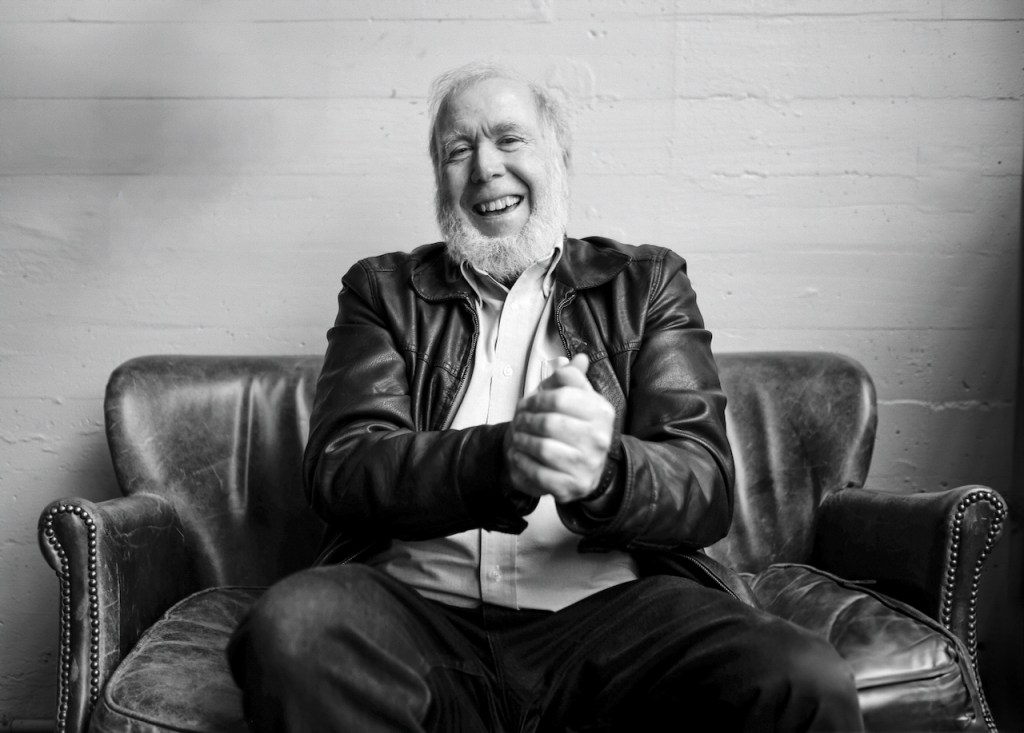
Kevin Kelly has spent much of his life asking a deceptively simple question: what is technology actually doing to us and for us? Not the gadgets themselves, but the deeper forces behind them. The long arcs. The patterns that only become visible when you step back far enough.
For more than four decades, Kevin has been one of the clearest observers of the technological age. He helped shape how the modern world thinks about networks, digital culture, artificial intelligence, and the accelerating relationship between humans and machines. Yet he approaches these immense questions with something disarmingly human: curiosity, humor, and a willingness to admit that the future is rarely obvious in the moment.
Kevin first came to broad attention as the founding executive editor of Wired magazine, which launched in 1993 and quickly became the intellectual center of the early internet era. Wired did not simply report on technology. It tried to understand the deeper forces transforming society. Kevin’s editorial vision helped define that mission. The magazine brought together scientists, hackers, entrepreneurs, artists, and philosophers to explore what the networked world might become.
But KK’s thinking about technology began long before Silicon Valley became what it is today.
In the 1980s he served as editor and publisher of the Whole Earth Review, the publication that grew out of Stewart Brand’s Whole Earth Catalog. The magazine connected ecological thinking, systems theory, and emerging digital tools. It attracted a generation of thinkers who believed technology could expand human capability while still remaining grounded in planetary awareness. Kevin absorbed that perspective deeply. Even today his writing about artificial intelligence and technological evolution retains an ecological sensibility.
His first major book, Out of Control (1994), explored the idea that complex systems such as economies, biological organisms, and technological networks share common principles. Long before the language of swarm intelligence and decentralized systems became common, Kevin was studying how order emerges from countless small interactions.
The book quietly influenced engineers and entrepreneurs across the technology world. Some of the early thinkers behind artificial life research, open source communities, and networked systems cite it as formative.
Kevin Kelly continued to develop these ideas across a series of widely read books including New Rules for the New Economy, What Technology Wants, and The Inevitable. Each tries to identify the underlying currents that shape technological change.
One of his most enduring ideas is the concept of protopia.
Rather than imagining a perfect utopia or fearing a collapsing dystopia, Kevin proposes something more realistic and more hopeful. Protopia describes a world that becomes slightly better each day through incremental improvements. Progress does not arrive in giant leaps. It happens through countless small advances that accumulate over time.
Technology, in Kevin’s view, is part of a larger evolutionary system that includes humans, culture, and tools. The system pushes toward increasing possibilities. Our responsibility is to guide that direction with wisdom.
Those who know Kevin Kelly personally often say that his greatest talent is not predicting the future. It is asking the right questions.
Conversations with him rarely stay on the surface. He has an unusual ability to probe assumptions and reveal the deeper structure of an idea. Friends, scientists, and entrepreneurs often remark that time spent talking with KK feels like stepping into a field of intellectual gravity where curiosity pulls every thought into motion.
Despite decades of influence, Kevin remains remarkably grounded. He travels frequently, photographs obsessively, and still approaches the world with the enthusiasm of someone who believes there is always more to learn.
In recent years he has also gained a wide readership through his short essays and practical reflections on living well, culminating in the book Excellent Advice for Living, a collection of distilled life lessons written with clarity and warmth.
The portrait above was photographed at The Interval, the café and gathering space at The Long Now Foundation in San Francisco. It is a fitting place to encounter Kevin Kelly. The Long Now is devoted to thinking on the scale of centuries rather than quarters or election cycles. KK’s work lives comfortably in that same timeframe.
He reminds us that the future is not something that simply happens to us. It is something we participate in shaping.
And the best place to begin is with a good question.


