
Neil Shubin has spent his career searching for the deep links that tie every creature on Earth to the ancient past. He is best known for the discovery of Tiktaalik, the fossil that helped illuminate the moment when fish first began to move onto land. That find came after years of hauling gear across the Arctic, reading rocks like old letters, and trusting that the right layer of stone would eventually give up its secret. It was the kind of science that demanded patience, grit, and a willingness to work where the sun barely rises.
Today Shubin sits at the University of Chicago, surrounded by models of Tiktaalik that remind him of the long path from ancient fin to modern limb. His work brought a clarity to evolution that reached far outside paleontology. It showed that the clues to our bodies can be read not only through genetics but also through rocks lifted from riverbanks and frozen valleys. His writing and teaching have helped millions of people see evolution as a living story and not a distant abstraction.
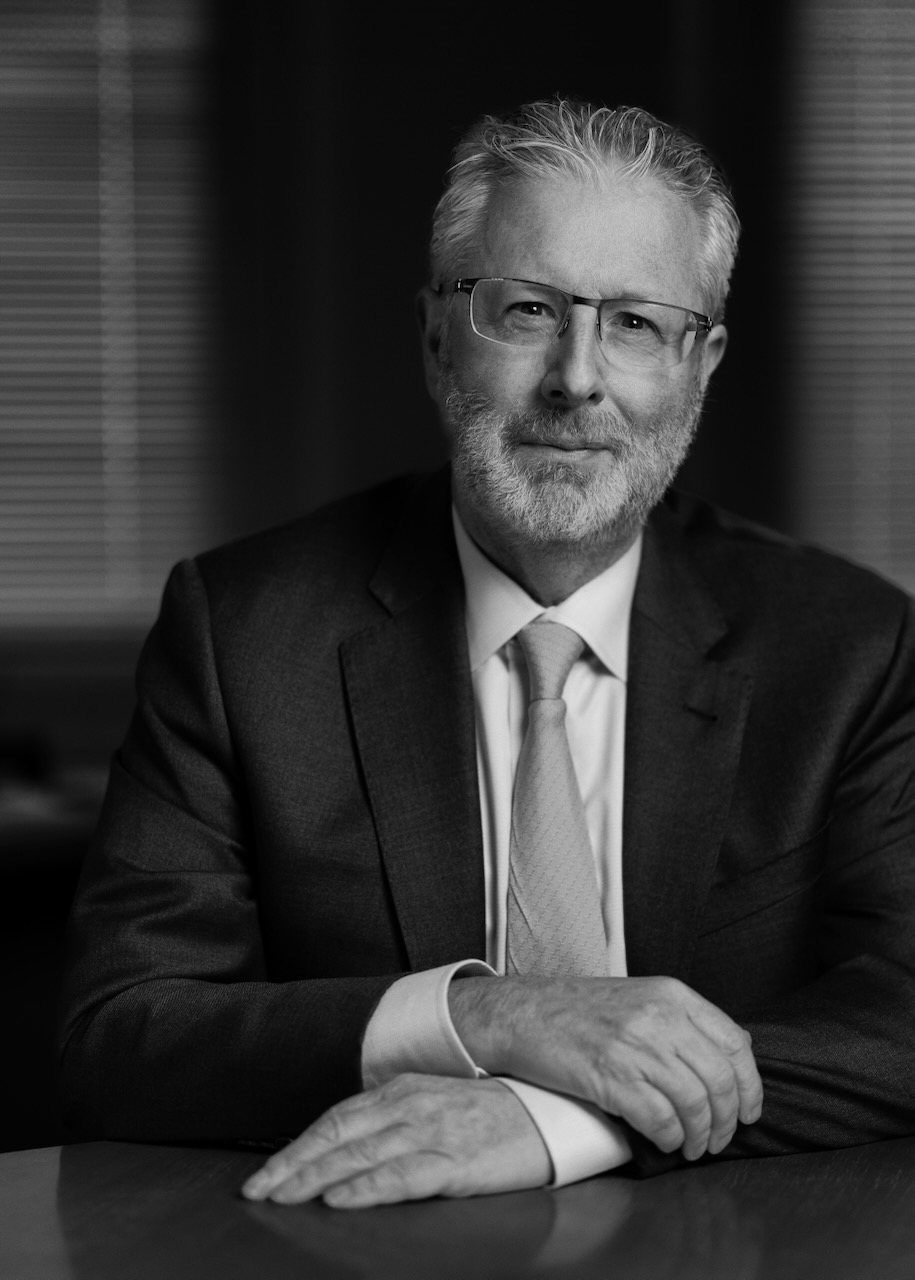
When I photographed him in his office, the space felt both formal and lived in. Fossils and casts lined the room like familiar companions. He was preparing for a new possibility in his career. Shubin has been nominated to become the next president of the National Academies of Sciences, a role that would place him at the center of American scientific life. These portraits were made in anticipation of that moment, a kind of quiet threshold between fieldwork and leadership.
Despite the suit and the serious setting, he carried the warmth and ease of someone who has spent most of his life outside. There is a steadiness to him, a field scientist’s habit of listening before he speaks. Even seated at a conference table, he looked like a man who could pick up a pack and head north without hesitation. At one point I noticed his shoes. Not dress shoes, but cold weather boots, the kind worn by people who know the feel of permafrost. They were a small but honest signal that he is most at home in the far places.
Shubin’s scientific life has always been tied to exploration. The search for transitional forms is not a tidy exercise. It relies on reading maps and ice, on understanding where an ancient river once cut through stone. His teams have spent seasons in the Arctic, living in tents and flying into sites where the landscape looks untouched by time. He talks about these expeditions with a mix of joy and seriousness. Each journey is part gamble, part pilgrimage. Fossils do not announce themselves. They wait.
At Chicago he teaches anatomy with the same spirit of curiosity that drives his expeditions. He moves easily between classroom, lab, and field. He sees the human body as a mosaic of ancient innovations. Wrists, necks, lungs, and limbs all carry traces of creatures long gone. For Shubin, these echoes are not just facts. They are reminders that evolution is a story written across deep time, with each generation adding a new line to the text.
The possibility of leading the National Academies comes at a moment when science is asked to navigate global challenges and public uncertainty. Shubin’s life in the field gives him a grounded perspective on the patience and collaboration required to uncover truth. He has spent years working in remote places where planning, teamwork, and resilience are the difference between discovery and failure.
In person he is calm, warm, and quietly observant. He carries the steadiness of someone who knows how to read weather and rock and who has learned that most breakthroughs come only after long hours of looking. These portraits capture him at a turning point. A field scientist with a pack full of Arctic stories. A teacher who sees the body as a map of deep time. And now possibly the leader of the institution that guides American science into its next chapter.


