
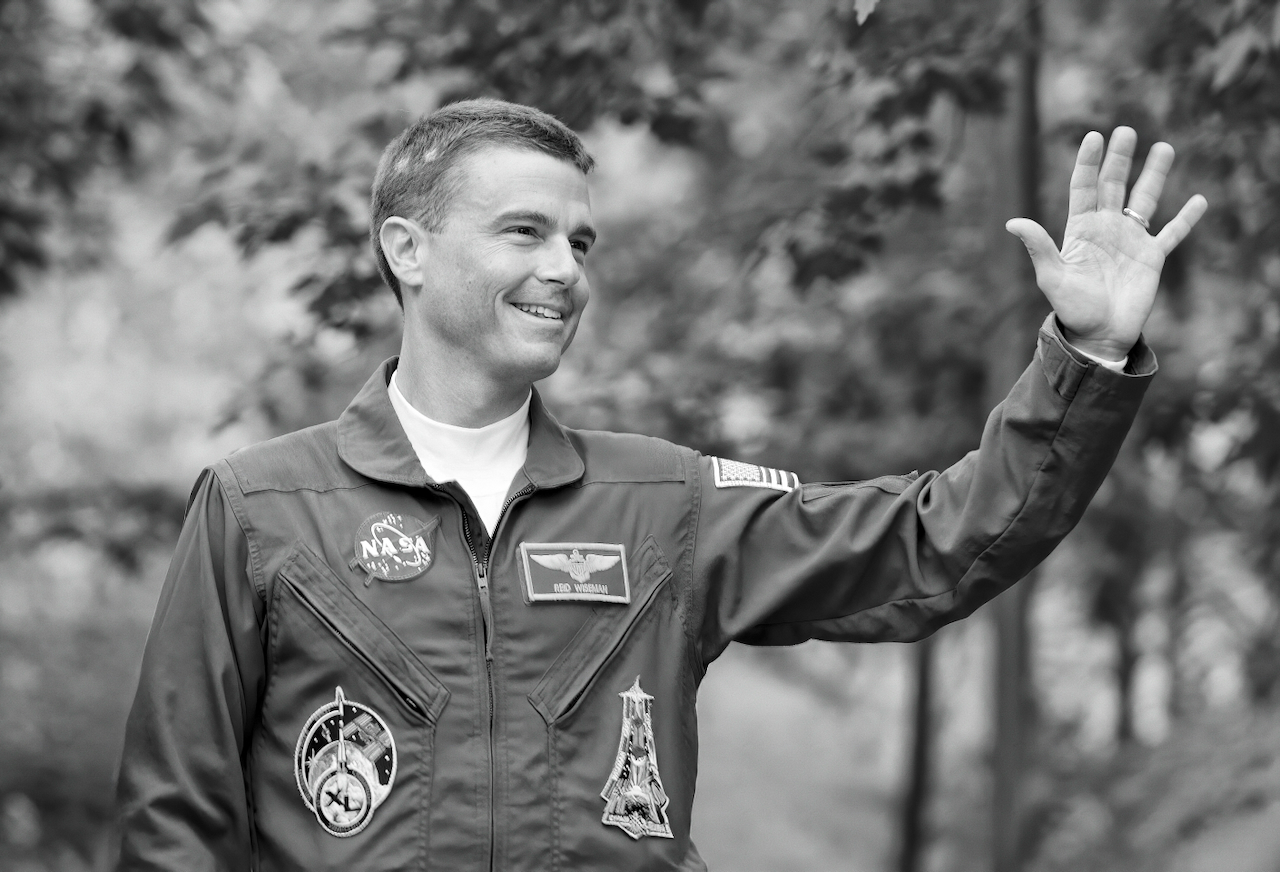
Reid Wiseman stood in the hard Kazakh light at Baikonur with the kind of calm that doesn’t announce itself. No performance to it. Just presence. The suit techs moved with practiced rhythm around him, hands checking seals, cables, pressure. The Soyuz waited out on the steppe, white and improbable, pointed at a sky that has seen a thousand departures. TMA-13M would carry him into a long arc of work and isolation, but in that moment it felt simple. A man, a machine, a trajectory already written in physics.
Reid Wiseman came to this through a path that favors discipline over spectacle. He grew up in Maryland, studied systems engineering, then flew with the U.S. Navy as a test pilot, the kind of work where curiosity is paired with restraint. In 2009, NASA selected him as part of a new class of astronauts, and he moved into the long apprenticeship that spaceflight still demands. Years of training in simulators, in water tanks, in classrooms that try to compress the complexity of orbit into something the body can remember.
Expedition 40 and 41 were his first real test. Once on the International Space Station, the days stretch and compress at the same time. Sixteen sunrises. Maintenance that never quite ends. Moments of stillness where Earth rolls beneath you in silence. Reid worked methodically. Spacewalks with Barry Wilmore, hands in bulky gloves, working outside the station where every movement is deliberate. Inside, he became known for something else too. He noticed things. He photographed the thin blue line of atmosphere, the geometry of cities at night, the soft gradients of storms. He wrote in short bursts that felt immediate and unfiltered. A human voice in a place that can easily become abstract.
Back on Earth, he moved into leadership, eventually serving as Chief of the Astronaut Office. That role is less visible but no less critical. It means shaping how crews train, how missions are approached, how risk is understood and carried forward. It means translating between engineers, flight directors, and the people who will actually ride the rocket. Reid did that with a kind of steadiness that people trust.
Now the work points outward again. Artemis II. The first crewed mission in this new chapter of lunar exploration. Reid will command the flight, leading a crew that will leave low Earth orbit, loop around the Moon, and come home. It is a mission that sits between eras. Not quite Apollo, not yet the sustained presence that Artemis promises, but a bridge that has to hold. The systems are new. The distances are old and unforgiving. There is no margin for theater.
When I photographed him at Baikonur, there was already a sense of that future in him, even if none of us named it yet. The same composure. The same attention to detail. You get the feeling that he understands the weight of what comes next, but doesn’t carry it as burden. More like alignment. The work in front of him, the people beside him, the trajectory ahead.
Spaceflight has a way of turning individuals into symbols, but standing there with Reid, it felt more grounded than that. He is not trying to be the face of anything. He is trying to do the job well, with clarity, with care for the crew, and with respect for the thin line between success and failure that every launch rides.
Artemis II will push humans farther from Earth than anyone has gone in half a century. Reid will be at the front of that return. Not as a figure of myth, but as a pilot, a commander, a person who has spent years preparing to sit atop a rocket and trust both the machine and the team behind it.


