
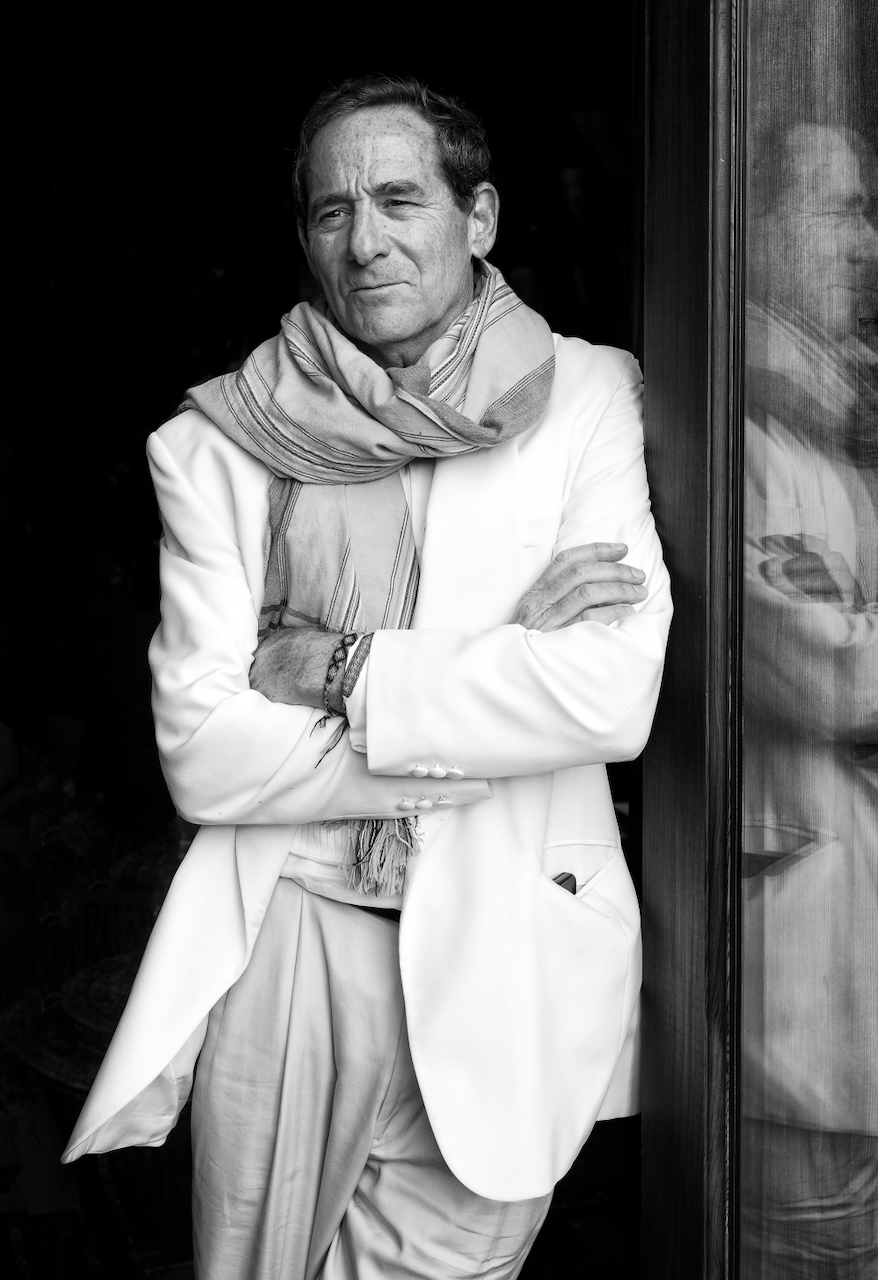
In the spring of 1971, a young news assistant at the New York Times found himself in a windowless room, feeding a Xerox machine with top-secret documents that would eventually change the course of American history. Robert Rosenthal was twenty-two then, a hockey player from Long Island with a sense of team and a nascent realization that the truth was something worth getting arrested for. Those documents were the Pentagon Papers. For Rosenthal, that was the baptism.
He is known to almost everyone in the trade simply as Rosey. To look at him is to see the physical map of a life spent in the pursuit of the difficult story. There is a specific kind of internal engine required to move from the quiet halls of the Times to the chaos of the Boston Globe, and eventually to the Philadelphia Inquirer, where he became a legendary editor. He didn’t just occupy the newsroom; he lived in the friction of it. He loved the noise, the ticking clocks, and the high-stakes gamble of a deadline.
As a foreign correspondent in Africa, Rosenthal saw the world at its most jagged. He was detained by the Ugandan army and lived through bouts of dysentery that would have sent a less determined man back to a desk job. He learned then that journalism was a form of witness. It was about finding the humanity in the middle of a conflict and translating it for an audience thousands of miles away. When he returned to Philadelphia to lead the Inquirer, and later the San Francisco Chronicle, he became what his peers called a “reporter’s editor.” He was the man who would trust a writer’s passion over a safe corporate directive.
The industry shifted under his feet. The collapse of the traditional newspaper model in the early 2000s could have been a coda for a man of his vintage, but Rosenthal saw it as a pivot. He took over the Center for Investigative Reporting when it was a skeleton crew of seven people. He saw that the story was the center of a wheel, and the platforms—digital, audio, film, even theater—were merely the spokes. Under his guidance, CIR grew into a powerhouse of non-profit journalism, proving that while the paper might fade, the need for the truth only grows more urgent.
Now, as he navigates the next chapter of a fifty-year career, he has moved into a high-level advisory orbit. He remains a pillar at CIR, while lending his perspective to the boards and advisory councils of CatchLight, the Human Rights Center at Berkeley, and the Investigative Editing Corps. He often talks about the creative passion that drives a journalist, a motivation that has nothing to do with the accumulation of wealth and everything to do with the belief that a well-told story can alter the gravity of a situation.
Rosenthal remains a man of deep loyalties. He speaks of his father, who started the only synagogue on Nantucket, and his own years on the ice, where he learned that an organization only works when every member feels a sense of value. He is a curator of facts and a protector of those who seek them. In an era of fractured trust and digital ephemera, he is a reminder that the most durable thing we possess is a true account of our shared world.


