
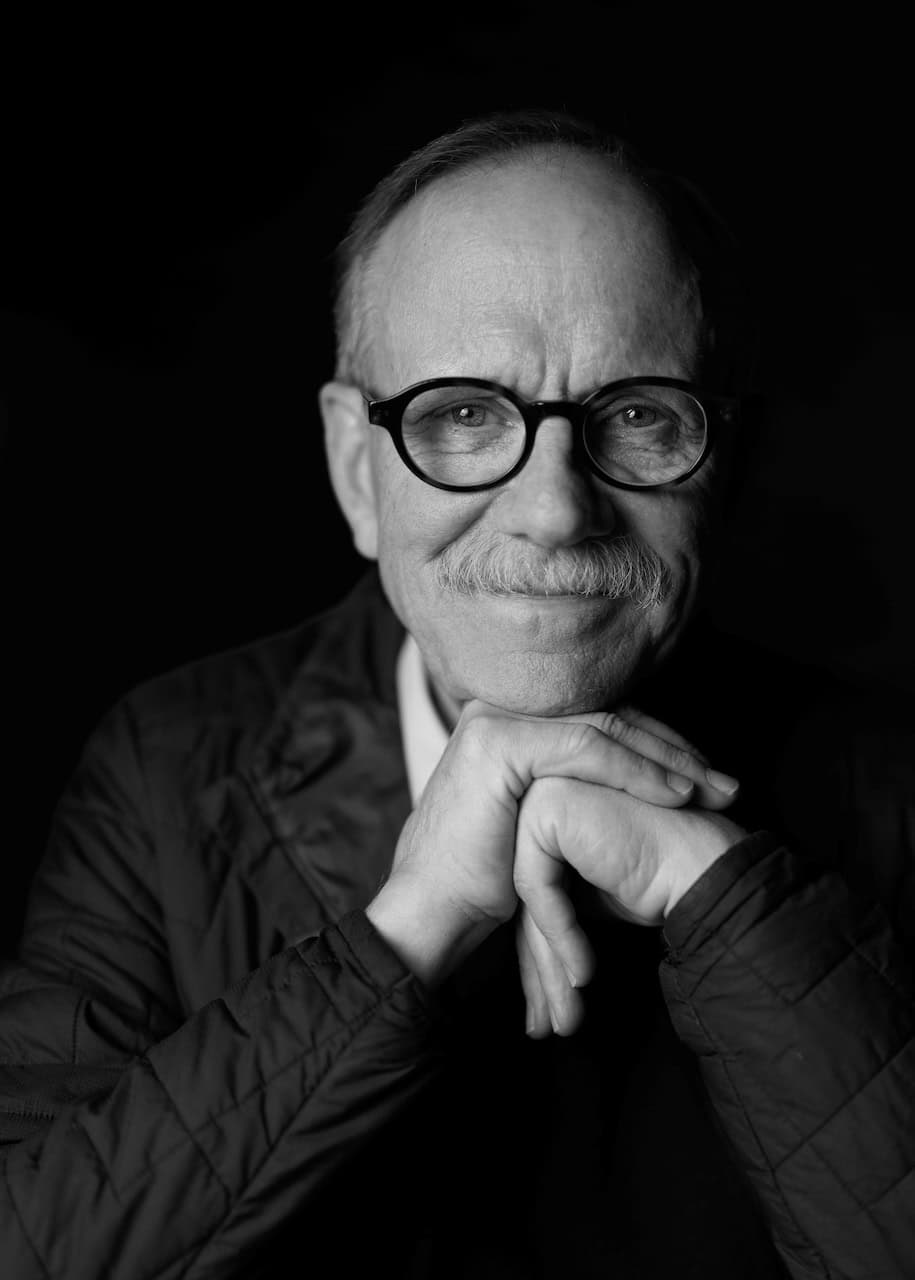
A new neuron in an adult human brain was once something most neuroscientists believed they would never see. Frederick “Rusty” Gage helped find them. The discovery opened a possibility that had largely been ruled out: even into adulthood, the brain could add new nerve cells.
I photographed Rusty at the Salk Institute in February 2026. His study overlooked the Pacific, with coastal light filling the room and long swells moving below the cliffs. Jonas Salk had once worked in that office. I felt the history of the place as soon as I entered, though Rusty’s warmth made it easy to settle into being there.
For decades, scientists had understood that learning could strengthen or alter connections between neurons. Making new neurons was another matter. Evidence had emerged in other animals, but finding it in people required a rare opportunity.
That opportunity came through patients being treated for cancer. They had received a substance that marked dividing cells as part of a diagnostic procedure. After their deaths, Swedish neuroscientist Peter Eriksson, Rusty, and their colleagues examined their brain tissue. In the hippocampus, a region important for learning and memory, they found cells bearing both the marker of recent division and the features of neurons.
The team published its findings in 1998. Some of the patients had been elderly. Their brains had continued making nerve cells at an age when decline was often treated as the whole story.
It was a finding full of promise, and one that demanded care. New neurons in a particular region did not mean the brain could replace everything lost to injury or disease. Researchers still had to establish how many were being made, what became of them, and what they contributed. Experiments in animals showed that new neurons could join working circuits, and that exercise and stimulating surroundings could encourage their growth. The extent and significance of this process in humans remain subjects of investigation.
Rusty’s curiosity also led him into the genetic differences between individual brain cells. We tend to think of our DNA as the same in every cell. His laboratory helped reveal a more varied picture, studying mobile stretches of DNA that can alter the genetic makeup of developing neurons. The brain’s complexity reaches down into the cells themselves.
What I remember of Rusty is how readily he made room for people. Students and colleagues seemed comfortable around him. He spoke softly, listened carefully, and brought an ease to our time together that the distinguished setting might otherwise have discouraged.
I had come to photograph a scientist whose work changed our understanding of the adult brain. I left thinking about the room, too. Jonas Salk had sat there looking out at the same ocean. Years later, Rusty was still giving the place what it had been built for: the freedom to ask a question whose answer might change what we thought possible.


