
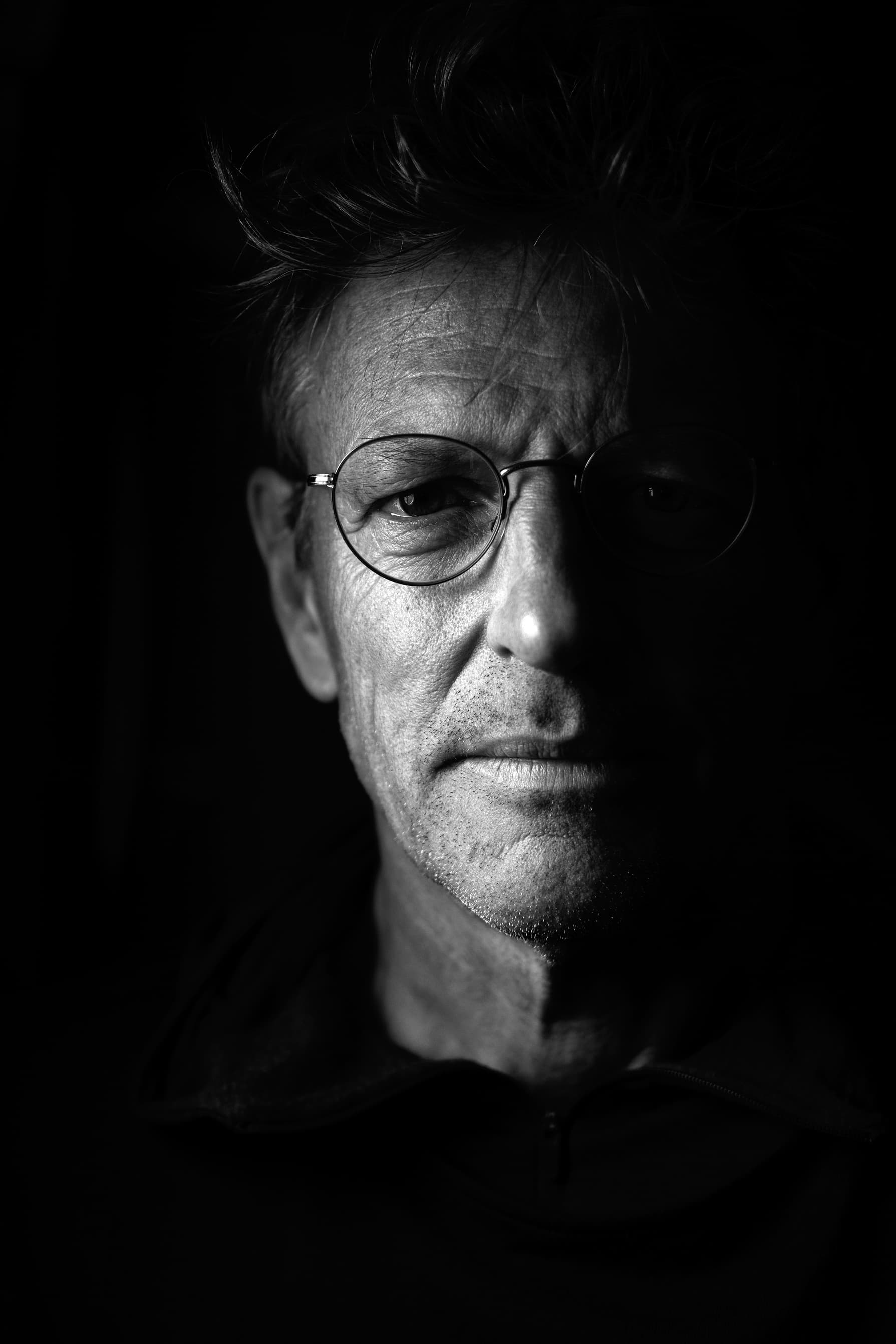
Over the past decade, I have photographed Norwegian entrepreneur and roboticist Hans Peter Brøndmo many times, capturing him in settings that mirror his dual nature as both a visionary engineer and an artist at heart. This particular portrait was taken aboard the R/V Kinfish in the high Arctic, where the stark, elemental beauty of the surroundings seemed to reflect his own blend of precision and imagination.
Hans Peter is a rare subject, an inspirational leader in engineering and a dear friend. We share a deep passion for photography and art, and our conversations often drift between the mechanics of robotic autonomy and the aesthetics of light and form. His work at Everyday Robots for Google was transformational, leading efforts to create learning-based, adaptive robots that could navigate complex human environments. By integrating advances in artificial intelligence, machine learning, and embodied cognition, he sought to push beyond conventional automation and into a future where robots could assist in meaningful, intuitive ways.
Beyond Everyday Robots, Hans Peter’s entrepreneurial career has been defined by a deep understanding of both technology and human experience. As a serial entrepreneur, he has founded and led multiple ventures at the cutting edge of robotics, AI, and digital media. His ability to bridge technical breakthroughs with real-world applications has made him a sought-after leader in the field. Early in his career, he worked on pioneering internet technologies and later shifted his focus to robotics, recognizing the profound impact intelligent machines could have on industries ranging from healthcare to environmental monitoring.
His approach to robotics is as much philosophical as it is technical. He often speaks of the importance of creating systems that adapt, learn, and evolve, machines that are not rigidly programmed but instead develop a kind of digital intuition. One of his key lessons from years of work in the field is that the best robots are not those that seek to replace humans but those that enhance human capability, allowing people to focus on creativity, connection, and problem-solving.
There are few people who move so effortlessly between disciplines, who can speak as fluently about neural networks as they can about composition and exposure. Hans Peter embodies that rare synthesis of logic and intuition, of rigorous engineering and boundless creativity. Whether on the deck of a research vessel or in the depths of a machine-learning lab, he carries the same spark of curiosity, a restless pursuit of the next great challenge.


