
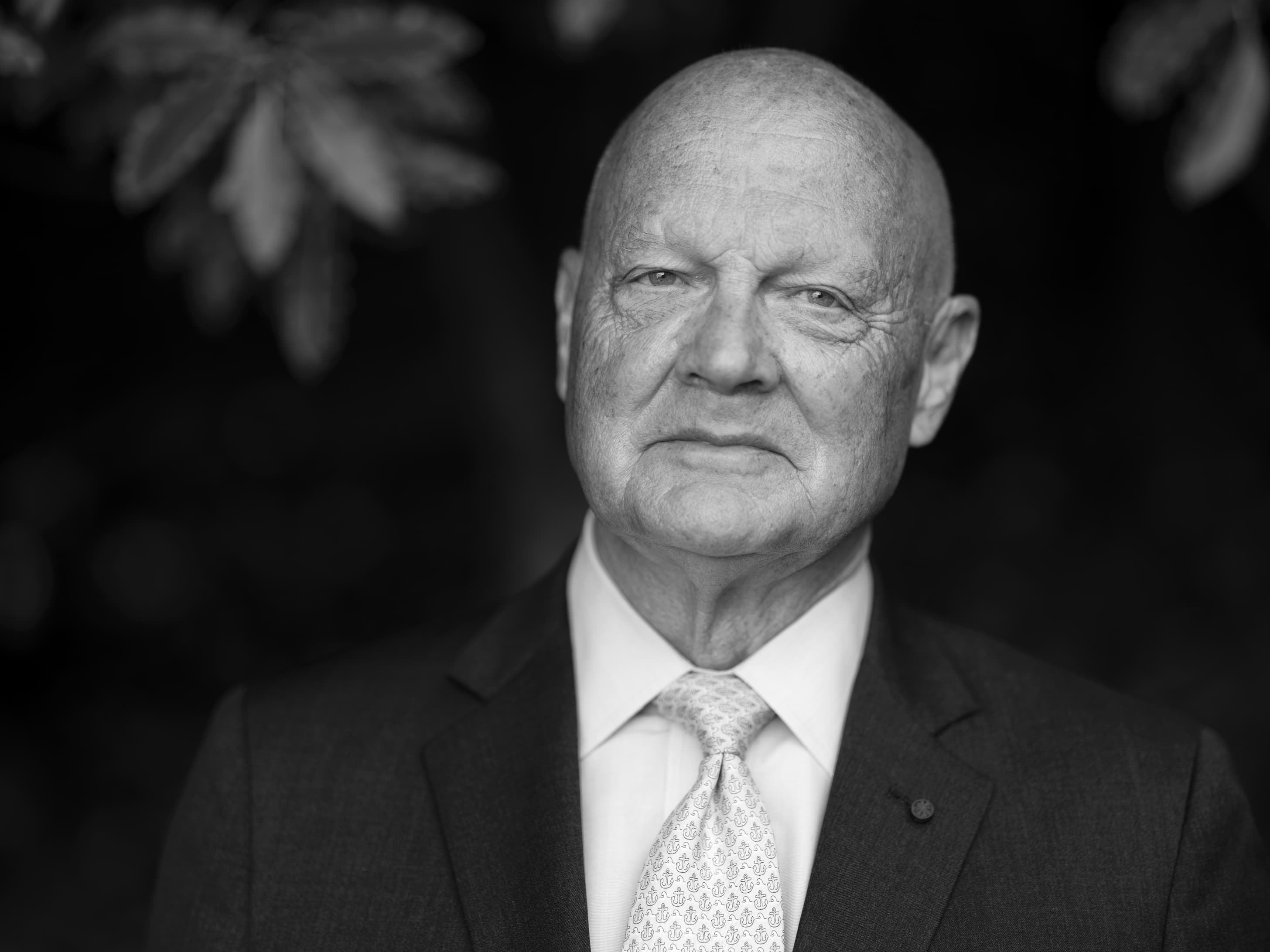
Admiral Jim Ellis welcomed me into his Tiburon home with the calm presence of someone who has spent a lifetime navigating complexity. His wife, Elisabeth Pate-Cornell, was there too, her sharp intellect and quiet grace filling the room alongside his steady demeanor. Together, they form a partnership where conversations flow easily between national security, risk analysis, and the kind of everyday warmth that speaks to a life well balanced.
The house itself was modest in its reflection of their achievements. There were reminders, of course, a model ship resting on a shelf, a few framed photographs hinting at decades of service and scholarship, but nothing that spoke loudly of titles or accolades. It felt more like the home of two people who had long since understood that true accomplishment doesn’t need to be displayed.
Admiral Ellis has held responsibilities that most of us can scarcely imagine. As Commander of U.S. Strategic Command, he was entrusted with decisions that touched the edges of global stability. Yet in person, there is no trace of the theatrical. His authority feels earned and effortless, the result of years spent making impossible choices with clarity and composure.
Elisabeth Pate-Cornell is equally formidable. A renowned Stanford professor and pioneer in engineering risk analysis, she has dedicated her career to understanding how complex systems fail and how to keep them from doing so. Watching them together, it became clear that theirs is a meeting of equals. They share a deep fluency in the language of risk, responsibility, and leadership, each bringing a different lens to the same fundamental questions about uncertainty and decision-making.
Both remain active at Stanford, mentoring, advising, and lending their experience to shape future leaders. Retirement, in their world, is simply a shift in focus rather than a slowing down.
Photographing Admiral Ellis that day was less about capturing a man defined by military command and more about revealing the quiet strength that remains when uniforms are put away. It was about the bond he shares with Elisabeth, the life they’ve built around intellect, service, and a steady commitment to guiding others through complexity. In their presence, you are reminded that true leadership often speaks softly, grounded in experience, reflection, and a shared sense of duty that endures long after the official roles have changed.


