
Lisa Kaltenegger works in the same office once occupied by Carl Sagan, on the upper floor of Cornell’s Space Sciences Building. The room carries the echo of his voice, that steady invitation to wonder, and she has built upon it with her own. She founded and now leads the Carl Sagan Institute, a center devoted to one of science’s most profound questions: how life begins and where else it might exist.
Kaltenegger is among the world’s leading experts on exoplanets, those distant worlds orbiting other stars. Her work bridges astronomy, chemistry, and biology, tracing the possible signatures of life written in the faintest starlight. She models how gases, oceans, and even vegetation could shape a planet’s color and reflection, helping scientists recognize what a living world might look like from light-years away.
We spoke in her office about origins, both cosmic and human. A brass orrery sat nearby, its miniature planets turning silently in the dim light. She described the early Earth as a restless experiment and the challenge of knowing what life’s first signals might have been. Our conversation drifted to Sagan’s legacy, to his insistence that science and imagination are not opposites but partners in understanding who we are.
Her recent book, Alien Earths, captures that same spirit. It is both a guide to discovery and an invitation to curiosity, written for anyone who has ever looked up at the night sky and wondered who else might be looking back.
Kaltenegger’s influence reaches far beyond Cornell. Her models shape the way new telescopes will search for habitable worlds, and her institute draws together scientists from across disciplines, united by the belief that life may be far more common than we once thought.
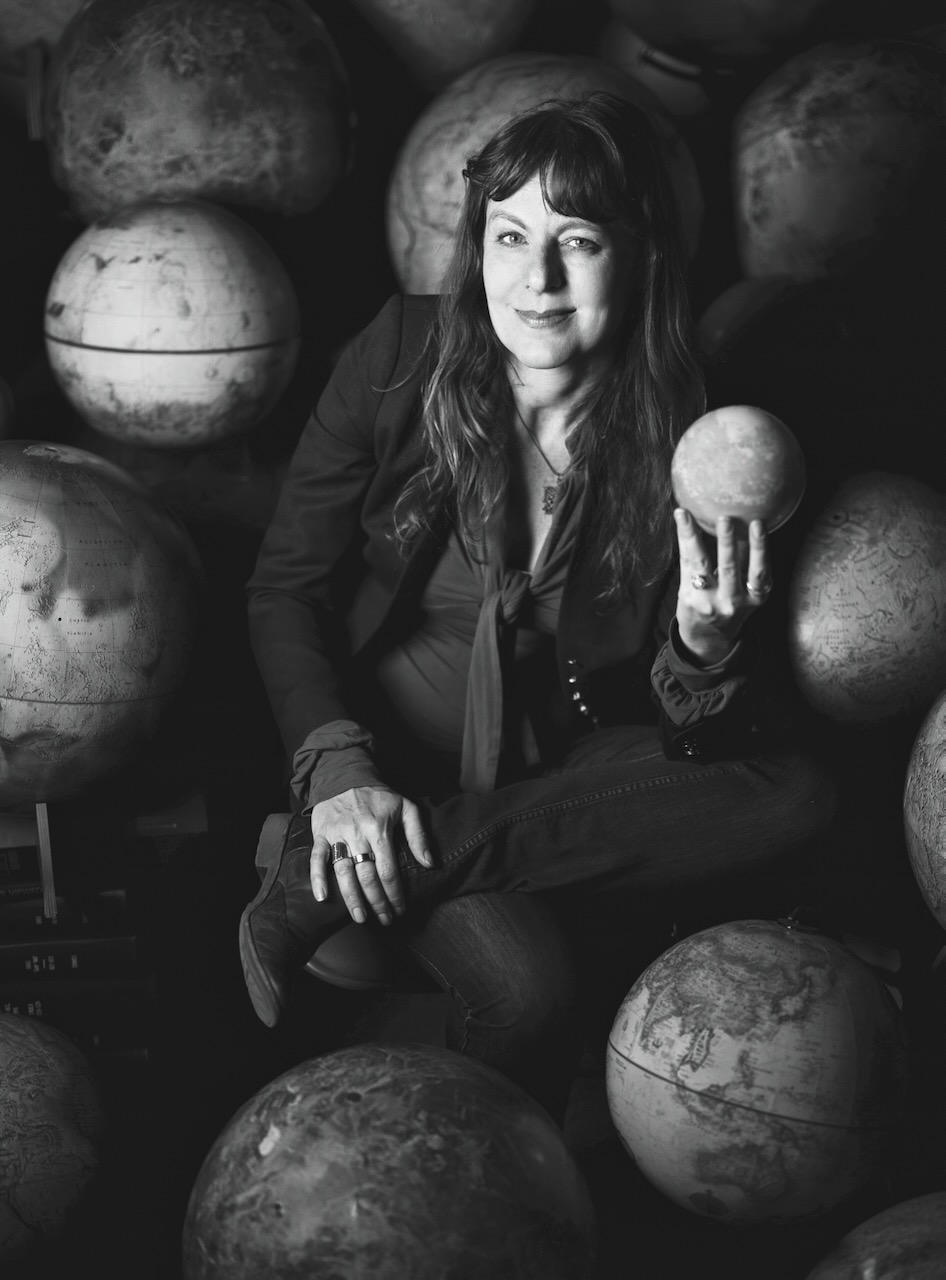
In person she is open and thoughtful, her enthusiasm unmistakable. The portraits from that day show her surrounded by instruments and ideas, eyes bright with the same curiosity that filled this office decades ago. For Lisa Kaltenegger, the search for other worlds is also a way of seeing our own more clearly, a reminder that wonder itself is a form of connection.


