
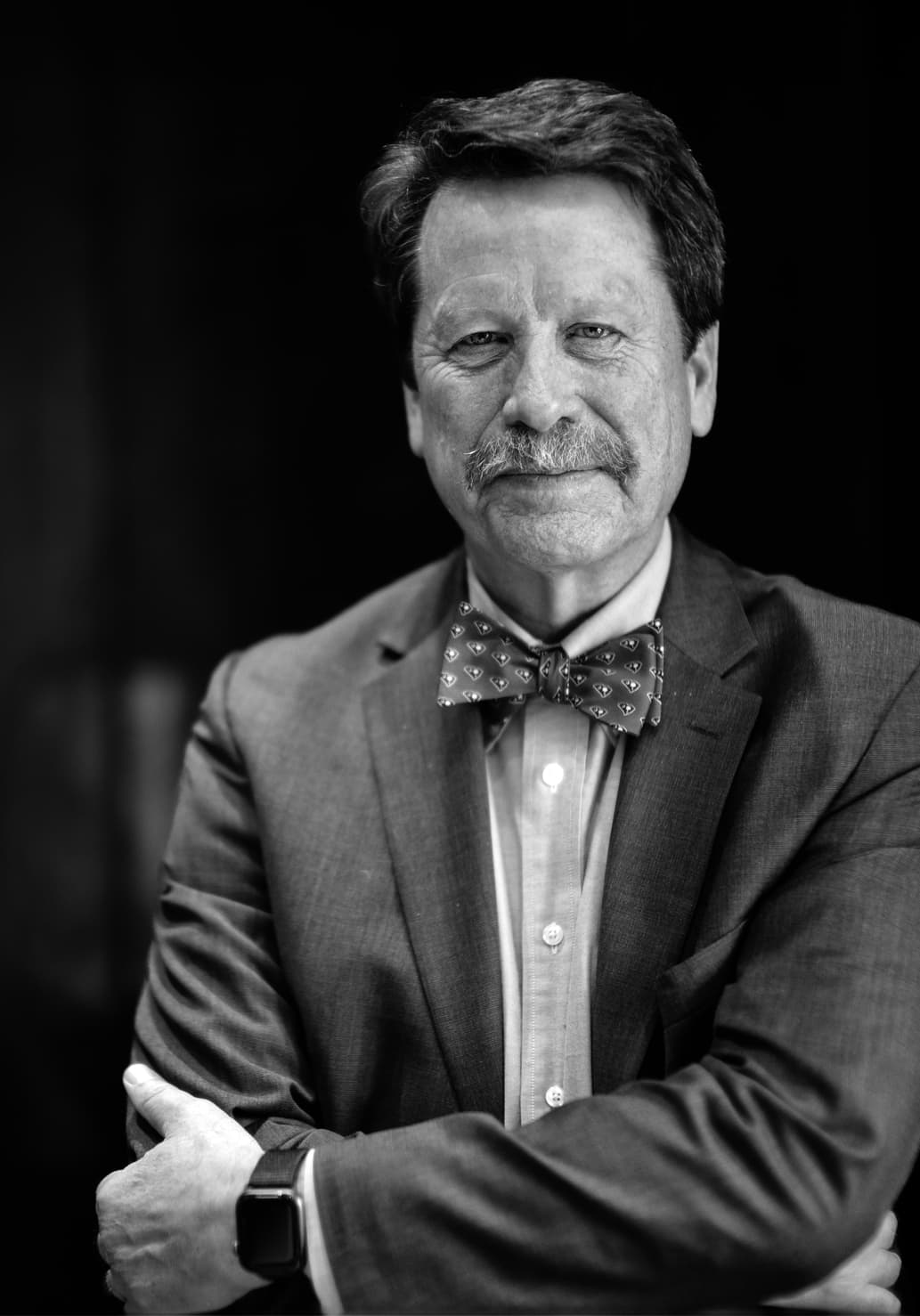
Dr. Robert M. Califf is a man accustomed to weighing risks and benefits, his mind a finely tuned instrument of medicine, regulation, and science. He is both clinician and policy architect, a cardiologist whose pulse beats in synchrony with the machinery of public health. When I photographed him at the National Academies in Washington, D.C., on February 20, 2020, he carried himself with the quiet authority of someone who had spent a lifetime making consequential decisions, decisions that rippled across hospitals, laboratories, and the daily lives of millions.
A two-time Commissioner of the U.S. Food and Drug Administration, Califf has long occupied the fault lines between innovation and safety, where medicine meets industry, where hope must be balanced with evidence. He built his early career at Duke, where he led pioneering cardiovascular trials, his work helping to shape how we understand and treat heart disease. He then became a leading force in the movement to modernize clinical research, recognizing that the great challenge of medicine was not just discovery but implementation, how to translate breakthroughs into better patient outcomes at scale.
At the FDA, first under Obama, then again under Biden, Califf presided over some of the most pressing medical and regulatory questions of our time: the opioid crisis, the explosion of digital health, the promise and peril of artificial intelligence in medicine. He has seen, up close, the tensions that define American healthcare, its brilliance and dysfunction, its staggering breakthroughs and inequities. He speaks about these things with the clarity of a physician who has not only studied the data but has seen its real-world consequences in the faces of patients.
Yet, for all his time in the corridors of power, there remains something deeply humanistic in Califf’s approach. His interests stretch beyond policy into the realm of ethics and human behavior, the ways in which science must not only be advanced but communicated and trusted. He is, in many ways, a bridge, between academia and government, between knowledge and action, between what is known and what must still be discovered.
It is rare to encounter someone whose career has spanned so many domains yet remains so clearly defined by a single, unwavering principle: the pursuit of better health, not just for the individual but for society as a whole. In that, Robert Califf’s life’s work is not just medicine, but something even more ambitious, the shaping of the future of medicine itself.


