
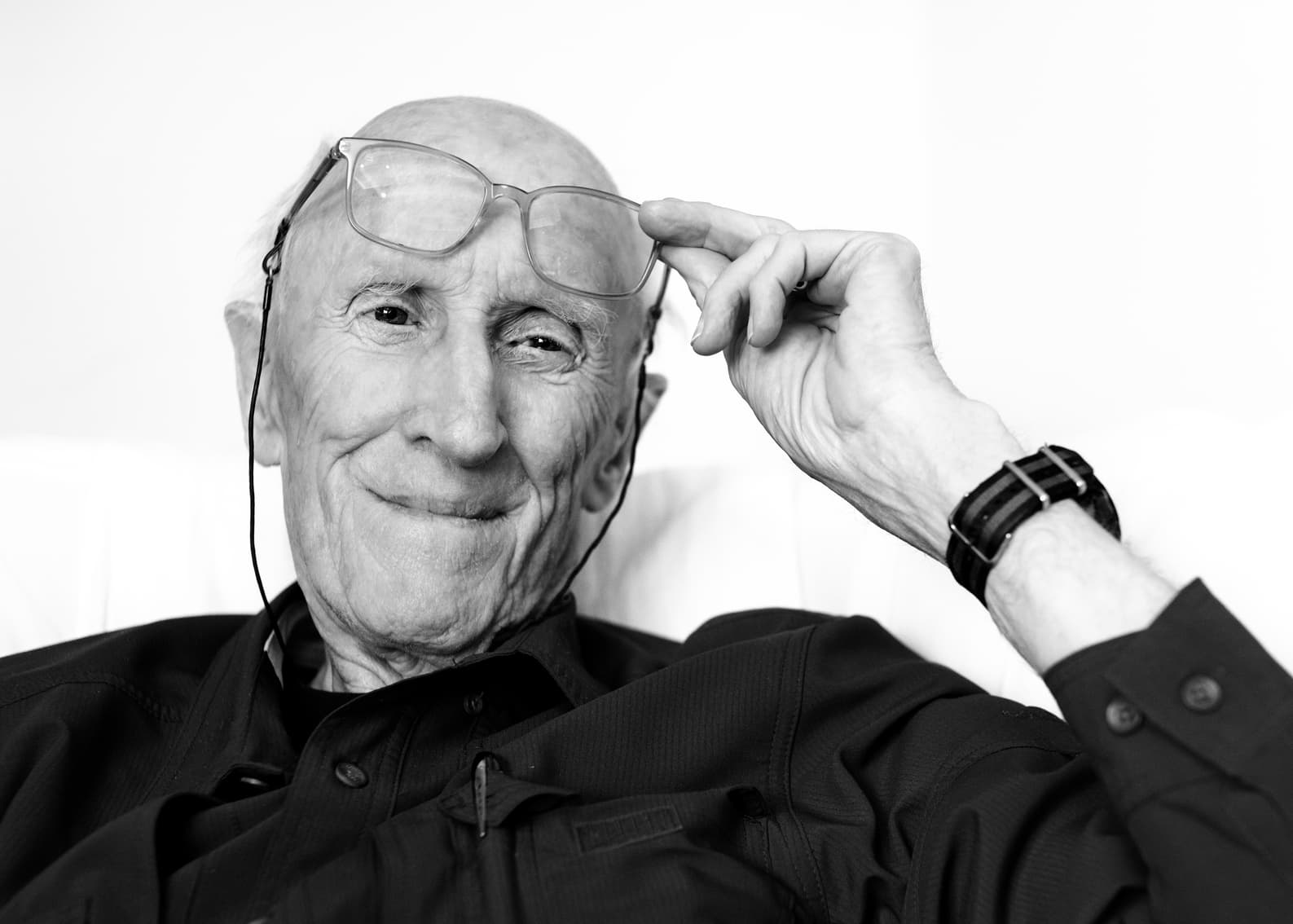
Stewart Brand has always lived slightly ahead of the curve, existing in a perpetual state of what comes next. Few people embody the arc of American innovation, counterculture, and long-term thinking quite like him. He is a man who has spent his life standing at the confluence of technology, environmentalism, and human potential, not just observing the tides of change but often directing them.
I first met Stewart more than twenty years ago when he visited me at Military.com. Even then, he carried an air of intellectual restlessness, a man whose mind seemed to stretch across disciplines, pulling insights from far-flung domains and distilling them into something coherent, something useful. Over the years, I’ve had the privilege of spending a good amount of time with Stewart and his brilliant partner, Ryan Phelan, in the spaces they call home, the immaculate tugboat Mirene in Sausalito, their river home in Petaluma, and even the depths of the 10,000-Year Clock in Texas. Once a year, I join them for the meditative ritual of picking olives from their grove, a tradition that brings together friends, a communal gathering that is as much about conversation and connection as it is about the harvest.
Stewart’s name is forever linked to the Whole Earth Catalog, the counterculture’s great guidebook to tools, ideas, and ways of thinking that could help people take control of their own lives. When he launched it in 1968, with the simple mantra, “Access to Tools,” he unknowingly catalyzed a generation of engineers, artists, environmentalists, and hackers. Steve Jobs later called it “Google before Google.” It was more than a publication; it was an ethos, decentralized, exploratory, and deeply human.
But Stewart never let himself be captured by the nostalgia of any one moment. He was already moving on. As George Dyson aptly put it, Stewart Brand shaped the 60s, but he was never defined by them, he would have been Stewart Brand in any era. He has lived a dozen lifetimes since then, each chapter an extension of the same core mission: seeing, understanding, and shaping the future.
For the past few decades, his primary vessel for this work has been the Long Now Foundation, the ambitious, almost impossibly patient organization he co-founded to foster long-term thinking in a world obsessed with the immediate. At its heart is the 10,000-Year Clock, a marvel of engineering and vision being built inside a mountain in Texas. Stewart has climbed inside that vast mechanism, touched its gears, and seen the future it represents. The clock is an idea made tangible: a reminder that we must think beyond our own lifetimes if we are to be responsible ancestors.
Long Now extends far beyond the clock. Through it, Stewart has championed projects that push against the tyranny of short-termism, reviving extinct species through de-extinction, preserving languages that would otherwise disappear, and creating tools to help civilization endure for millennia. He has always understood that the future is a negotiation, one that requires equal parts imagination and maintenance.
Maintenance is, in fact, the subject of his latest book, Maintenance: Of Everything, where he turns his attention to the quiet, unglamorous work that keeps the world running. It is a book that could only have come from Stewart, someone who has spent a lifetime among inventors and visionaries but knows that every great system, whether biological, technological, or cultural, depends on careful tending. If the Whole Earth Catalog was about the joy of building, Maintenance: Of Everything is about the necessity of upkeep.
His own life is proof of this philosophy. Stewart has kept certain rhythms, certain traditions alive. He still hosts curious minds aboard the Mirene, still gathers people for conversations that stretch across disciplines and decades. He and Ryan still take to the river, still think expansively about conservation, de-extinction, and the ecological future. And, yes, he still picks olives every year, a simple, communal act that, in its own way, echoes the grand ambitions of the Clock.
Photographing Stewart has been a way of charting his presence through time, capturing the places where he works, thinks, and builds. From the cluttered, derelict boat office near Gate 5 in Sausalito to the elegantly maintained Mirene, from the river house in Petaluma to the hollowed-out chambers of the Clock, his spaces tell the story of a man who is always in motion, yet always grounded in something essential.
Stewart is still building, still asking, still pushing outward. He remains one of the greats, an intellectual explorer with the soul of an artist and the discipline of an engineer. He understands that the past is prologue, that the future is both an abstraction and a responsibility. Stewart Brand is not just a thinker; he is a steward, in every sense of the word. And the world is better for it.


